Teenage Engineering makes some of the most opinionated hardware on the planet—devices that feel like design objects as much as instruments. Their EP-133 K.O. II and the newer EP-1320 Medieval are both what the industry calls sampler-sequencers: portable boxes that let you record sounds (samples), arrange them into rhythmic patterns (sequences), and perform with them without ever opening a laptop. But beyond that shared premise, these two machines make almost entirely different bets about who you are and how you work. If you have a few hundred dollars allocated and you’re trying to decide between them, this breakdown is built for exactly that moment.
What You’re Actually Choosing Between
The EP-133 K.O. II (street price approximately $349 as of mid-2026) is the successor to Teenage Engineering’s original K.O. sampler—a machine that earned a genuine cult following for making sampling feel fast, tactile, and weirdly fun. Sound On Sound’s review of the EP-133 K.O. II describes it as a “sampling sketchpad that rewards impulsivity,” which is an accurate summary of the design philosophy. You press a button, it records. You chop, you sequence, you perform. The interface is unconventional but it uses plain English labels for its controls, and coverage across multiple publications consistently describes the learning curve as steep for the first hour and then suddenly intuitive.
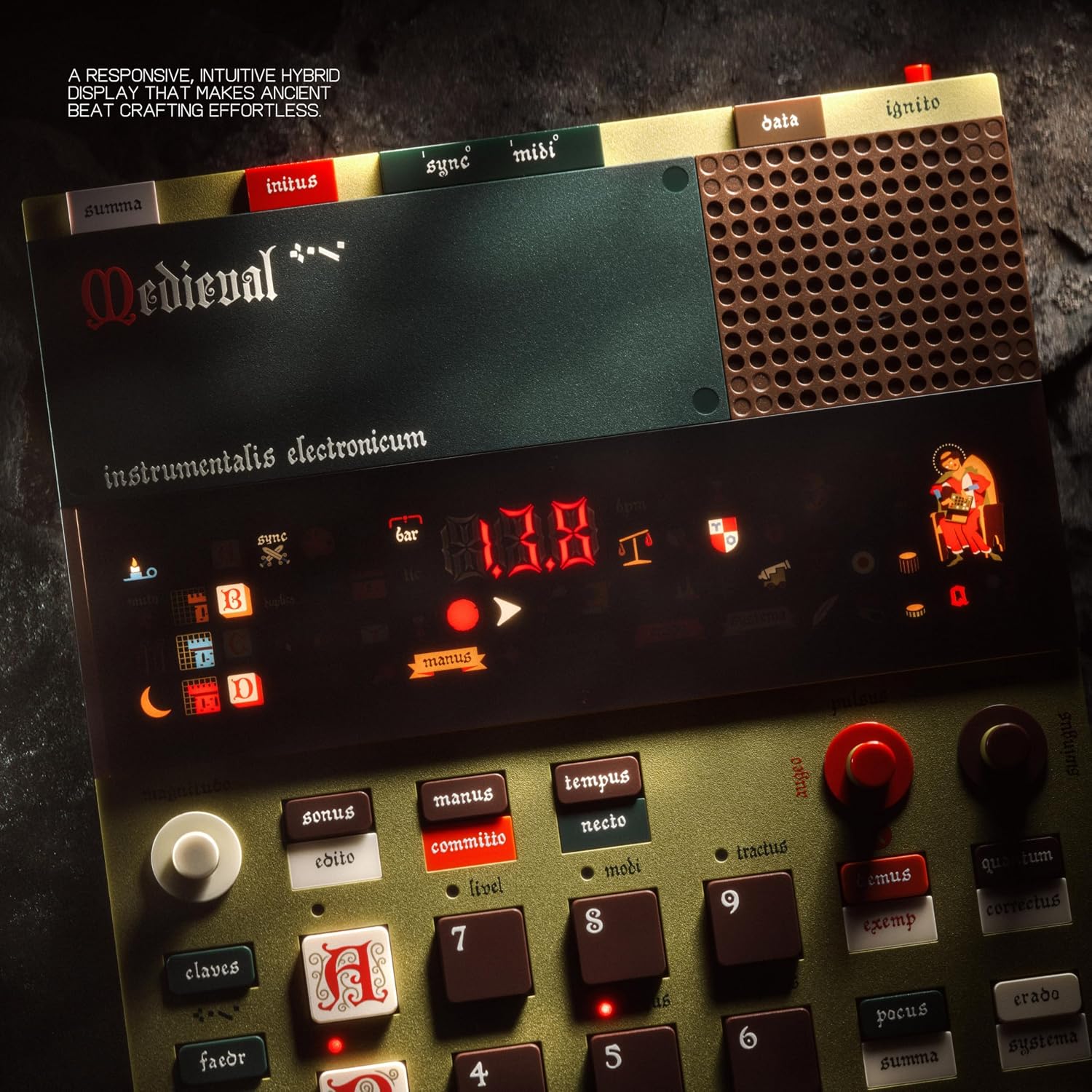
The EP-1320 Medieval is a different proposition. It’s named for its thematic conceit: every control, parameter, and mode is labeled using medieval vocabulary—“scribe,” “tome,” “herald,” and so on. Synthtopia’s overview of the EP-1320 Medieval notes this isn’t purely cosmetic; the naming system replaces conventional audio terminology throughout the interface. Owners across long-run reviews report spending 10 to 15 hours or more before feeling genuinely fluent. That’s not a warning sign for the right buyer—it’s a feature of a machine that rewards deep study. But it is a meaningful data point if you’re comparing workflows.
Core Tradeoffs: Three Dimensions That Matter
Interface and Learning Curve
The K.O. II uses a grid of pads, a bright OLED display, and controls labeled with words like “sample,” “trim,” and “punch.” MusicRadar’s review of the EP-133 K.O. II notes that producers coming from DAWs (digital audio workstations—software like Ableton Live or Logic Pro) tend to find the workflow translatable within a session or two, even if the paradigm is different. The main cognitive load is understanding how the device’s “groups” and “patterns” map to what you’d call tracks and scenes in software. That mental translation is annoying for a day, then invisible.
The Medieval’s interface asks for something closer to language acquisition. CDM’s coverage of the EP-1320 Medieval describes the medieval naming convention as adding “a genuine layer of cognitive overhead beyond the usual learning curve”—meaning you’re not just learning a new device, you’re learning a new vocabulary for a new device simultaneously. Owners who find this rewarding describe it as immersive, almost game-like. Owners who find it frustrating tend to bounce off the device entirely in the first week.
The tradeoff in plain terms: K.O. II gets out of your way faster. Medieval asks for more investment before it gives anything back—but its advocates say the payoff is a more distinctive and personal workflow.
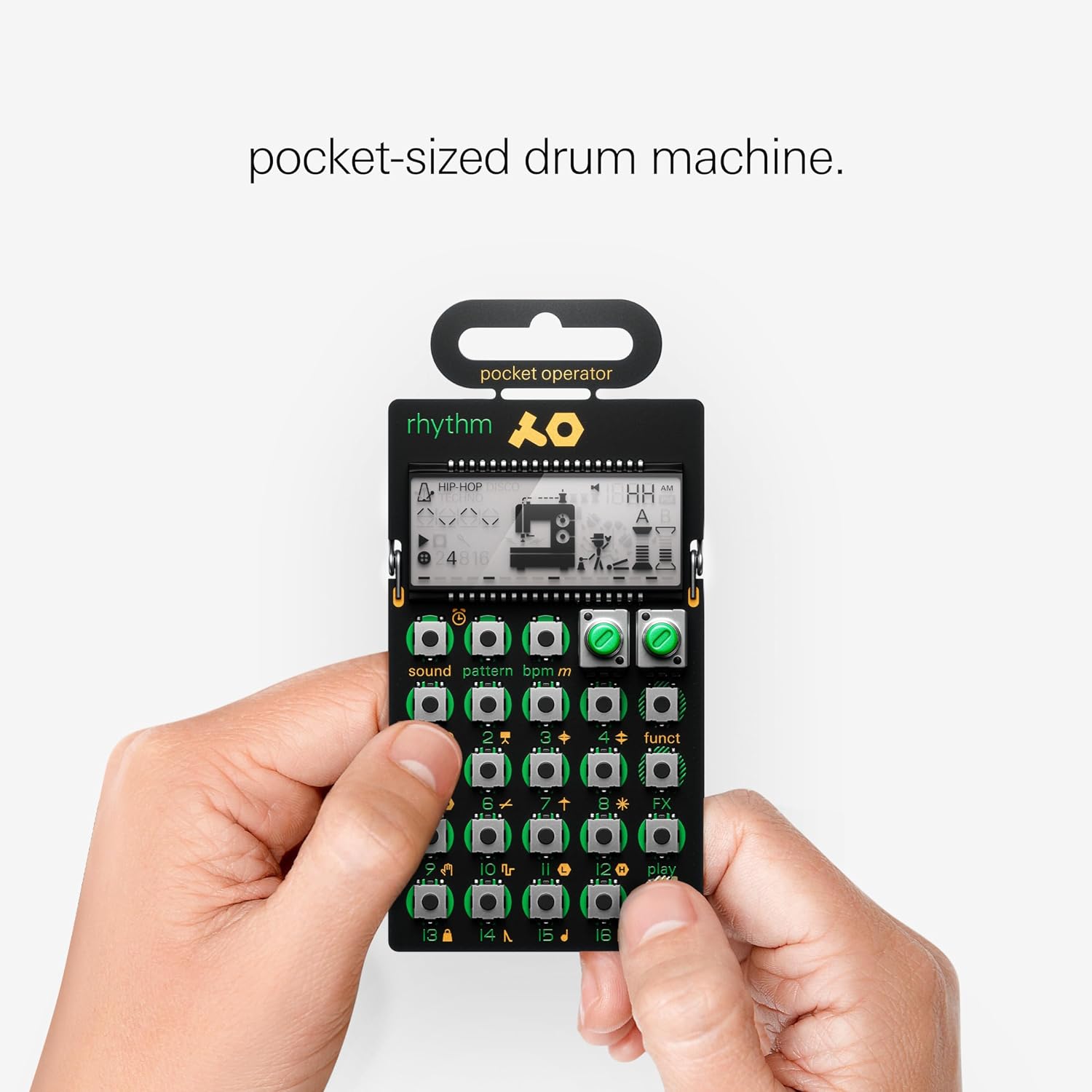
teenage
$59.00
In stock on Amazon
Check price on AmazonSampling Architecture: A Critical Constraint
This is where the comparison gets technically important. The K.O. II treats each sample as a flexible, playable object: you can assign different samples across pads, tune them independently, chop them, and trigger them chromatically across the pad grid. MusicRadar’s review of the EP-133 K.O. II confirms it handles melodic sampling—recording a bass line riff or a vocal phrase and playing it back at different pitches—with reasonable flexibility given the device’s price tier.
The EP-1320 Medieval has a documented and significant constraint that anyone doing melodic or chromatic sampling needs to understand before purchasing: you cannot change the starting pitch of individual samples independently. Owners in long-run reviews flag this consistently—everything on the Medieval has to share a common key and root reference. If you’re building purely rhythmic, percussive, or textural content where relative pitch isn’t a concern, this constraint may never surface. If you want to layer a sampled synth chord against a sampled bass hit at a specific transposition, the Medieval’s architecture will frustrate you in ways the K.O. II won’t.
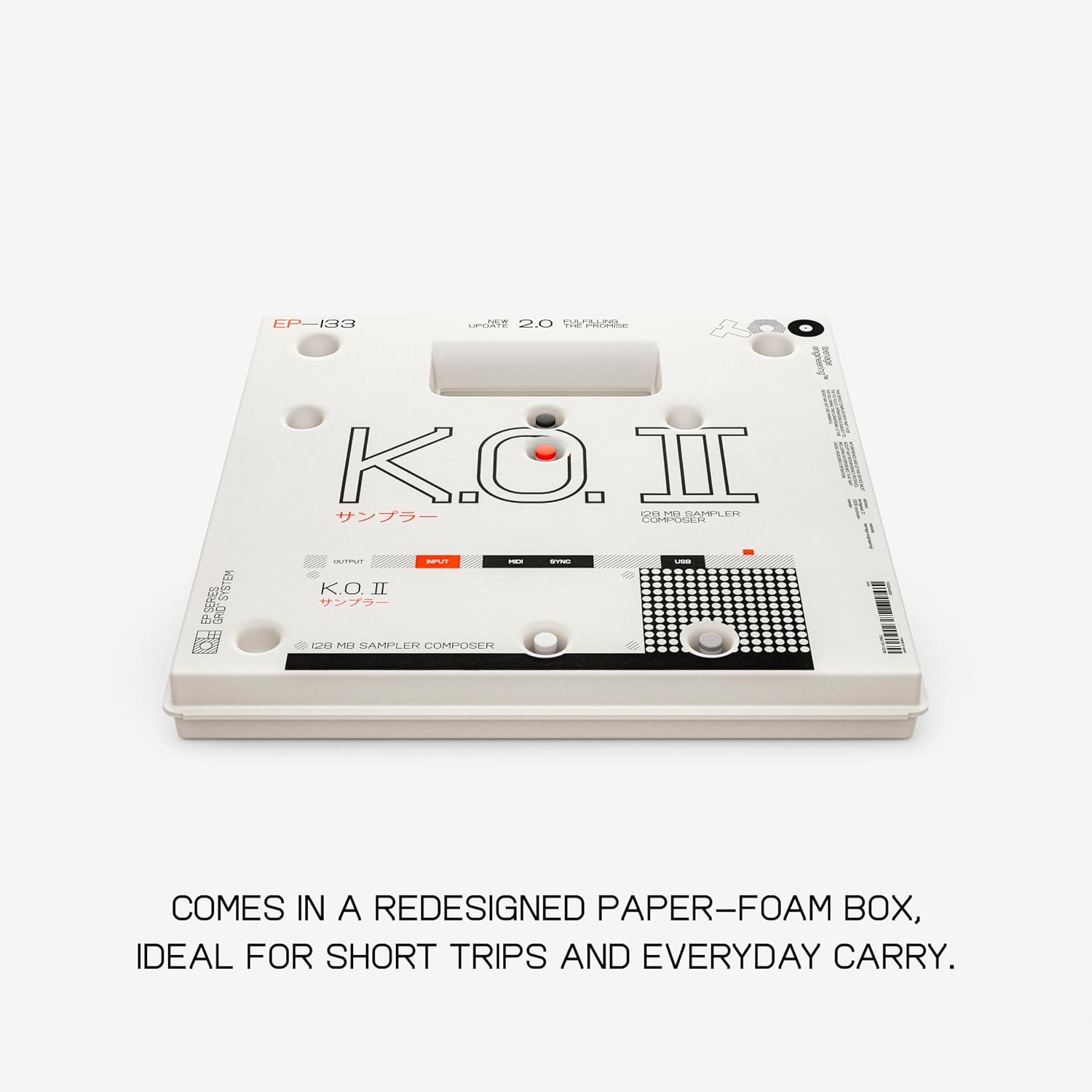
teenage
$329.00
In stock on Amazon
Check price on AmazonWorkflow: Standalone vs. Ecosystem Hub
One specific use case that reviewers keep returning to for the K.O. II is its pairing with Pocket Operators—Teenage Engineering’s smaller, cheaper line of standalone instruments. The K.O. II and Pocket Operators can be synced together via a simple audio sync signal (no MIDI cables, no USB—just a 3.5mm patch cable carrying a timing pulse). Sound On Sound’s review of the EP-133 K.O. II describes this as making the K.O. II a natural hub for lo-fi beat production: chain a few POs through the K.O. II’s line input, sample them on the fly, and build a complete performance rig for under $500 total.
The K.O. II also functions well as a fully standalone device. Owners consistently report that connecting it to other gear is a bonus, not a prerequisite—the internal sampling, sequencing, effects, and mixer are complete enough for extended solo sessions.
The Medieval is more self-contained by design philosophy. It’s not built around an ecosystem hub concept in the same way, and Perfect Circuit’s product listings for Teenage Engineering confirm it is positioned as a standalone instrument rather than a sync-capable centerpiece for a broader rig.
Teenage
In stock on Amazon
Check price on AmazonSide-by-Side Summary
| Feature | EP-133 K.O. II | EP-1320 Medieval |
|---|---|---|
| Approx. street price (mid-2026) | ~$349 | ~$599 |
| Reported fluency timeline | 2–6 hours | 10–15+ hours |
| Individual sample pitch control | Yes | No (shared root) |
| PO sync via audio cable | Yes | No |
| Interface language | Standard audio terms | Medieval vocabulary |
| Best for melodic sampling | Yes | No |
| Best for deep, immersive study | No | Yes |
Who Should Buy the K.O. II
The EP-133 K.O. II earns its reputation as a gateway device for DAW-dependent producers who want to work more spontaneously—and as a capable performance instrument for people who’ve already been down that road. If you’re investing in your first dedicated hardware sampler and you want something that rewards experimentation within the first session, the K.O. II is the choice that the community consensus supports most clearly.
It’s also the right call if:
- You’re building a live rig around Pocket Operators or other gear that benefits from a sync-capable hub
- You want to do melodic or chromatic sampling—pitched bass lines, harmonic textures, vocal chops
- You’re a producer who records sets without a laptop and needs an instrument that’s reliable under pressure within a short adaptation window
MusicRadar’s review of the EP-133 K.O. II specifically calls out the device’s suitability for producers who want to “escape the screen” without abandoning the fast, iterative working style that DAW-based workflows encourage. That framing captures the K.O. II’s appeal cleanly.
Who Should Buy the EP-1320 Medieval
The Medieval is for a specific kind of buyer: someone who approaches hardware as an aesthetic and intellectual commitment, not just a functional tool. If you’ve already internalized one or two complex devices—if you own an Elektron box or have built a Eurorack patch from scratch—you have evidence that you’re the type to find the Medieval’s investment worthwhile.
Synthtopia’s overview of the EP-1320 Medieval notes that the device’s thematic concept isn’t a superficial reskin; the naming convention is genuinely load-bearing in how the instrument teaches you to think about sound design. That’s either a compelling proposition or a dealbreaker, depending entirely on your temperament.
It’s also worth considering if:
- You’re building purely percussive or textural sound design where individual sample pitch control isn’t a concern
- You want an instrument that feels genuinely alien and rewards extended study
- You’re drawn to the Medieval’s specific sound character and creative constraints as generative tools, not obstacles
Frequently Asked Questions
Can you change the pitch of individual samples on the EP-1320 Medieval?
No—this is a confirmed architectural limitation that surfaces consistently in owner reviews of the EP-1320 Medieval. Individual samples cannot be assigned different starting pitches; they share a common root reference. This is a significant constraint for anyone planning to build melodic or chromatic sample layers. If pitch independence across samples is important to your workflow, the EP-133 K.O. II handles this more flexibly.
How long does it realistically take to learn the EP-1320’s interface?
Owners consistently report 10 to 15 hours before feeling genuinely comfortable navigating the Medieval’s parameter structure—and this is with the medieval naming convention adding an extra layer of vocabulary acquisition on top of the standard learning curve any new sampler requires. CDM’s coverage of the EP-1320 Medieval specifically identifies the naming system as a meaningful cognitive overhead factor, separate from the usual challenge of learning a new instrument’s architecture. Budget at least several dedicated sessions before expecting to use it intuitively in a performance context.
Does the EP-133 K.O. II work well as a standalone device without connecting to other gear?
Yes. Owner reports consistently describe the K.O. II as a complete, self-contained instrument. Its internal sampling, pattern sequencer, per-track effects, and mixer provide a full workflow without any external connection. Linking it to other gear—Pocket Operators, external synths, or a DAW—expands the possibilities, but it’s not a prerequisite for productive sessions.
What is the difference between the PO-32 Tonic and the PO-12 Rhythm for someone who wants drum synthesis?
This comes up often because both are Pocket Operators with “drums” in their description, but they’re fundamentally different products. The PO-12 Rhythm is a sample-based drum machine—it plays back preset sounds stored in its memory. The PO-32 Tonic is a drum synthesizer: it uses the Microtonic engine (a well-regarded percussion synthesis algorithm developed by Sonic Charge) to generate percussion sounds algorithmically rather than playing back recordings. Owners who upgrade from the PO-12 to the PO-32 consistently describe it as worth the price difference specifically because you’re getting synthesis, not playback—the sounds are generated in real time and can be shaped more deeply. The distinction confuses a lot of buyers because both live in the Pocket Operator lineup, but they’re aimed at different interests.
Can the EP-133 K.O. II and a Pocket Operator be synced together?
Yes. The K.O. II supports Teenage Engineering’s audio sync system, which transmits a timing pulse through a standard 3.5mm cable. This is the same sync standard used across the entire Pocket Operator line. You can chain a Pocket Operator into the K.O. II’s sync input so both devices run locked to the same tempo, with no MIDI required. Sound On Sound’s review of the EP-133 K.O. II specifically highlights this as a productive lo-fi beat production workflow—the K.O. II functions naturally as a sync hub for a small PO-based rig.
The Decision Rule
If you need to move quickly, work melodically, or have any uncertainty about whether you’ll commit to a steep learning curve: the EP-133 K.O. II is the clearer choice for the majority of intermediate producers. The community consensus around it is unusually consistent—it inspires people to work, it sounds good, and it gets out of the way.
If you’ve already demonstrated you can internalize a complex, idiosyncratic instrument—and you specifically want the EP-1320 Medieval’s constraints and character as part of your creative process—the Medieval rewards that investment. But go in clear-eyed: the medieval interface is not just a quirk, it’s the instrument. That’s either compelling or it’s a dealbreaker, and only you know which.