A standalone drum machine is exactly what it sounds like: a self-contained hardware box that generates percussion sounds and plays rhythmic patterns on its own, without needing a computer, a DAW (digital audio workstation), or any other gear plugged in. For bands that want a locked-in groove behind a singer-songwriter set, or for producers who like to sketch ideas away from a screen, a good standalone drum machine can be the simplest and most reliable tool in the room. But “simple” does not mean these boxes are all the same. The Alesis SR-16, Korg Volca Beats, and Roland TR-08 sit at three very different points on the price and feature spectrum, and choosing the wrong one creates real friction—wrong outputs for your venue’s PA, wrong workflow for your writing process, or wrong sound palette for your genre. This guide breaks down each machine honestly, names the tradeoffs, and ends with a clear decision framework so you can move forward with confidence.
| EDITOR'S PICKRoland Rhythm Composer | Mid-tierAlesis SR-16 - Studio-Grade Sta… | Budget pickKorg Volca Beats Analog Rythem… | |
|---|---|---|---|
| Outputs | 10 | — | — |
| Sequencer Steps | — | — | 16-step |
| Patterns | — | 100 patterns | — |
| Sound Engine | — | — | Analog |
| On-Board Effects | — | ✓ | — |
| Sound Library | — | ✓ | — |
| Price | $494.99 | $159.00 | $129.98 |
| See on Amazon → | See on Amazon → | See on Amazon → |
What You Are Actually Choosing Between
Before the spec deep-dive, it helps to understand the fundamental character of each machine.
The Alesis SR-16 is a ROM-based drum machine—it plays back high-quality digital samples recorded from real acoustic and electronic drums. It has been in continuous production since 1990, and that longevity is not an accident. Sound On Sound’s retrospective coverage of the SR-16 notes its extraordinary durability record, with long-term owners reporting reliable operation across decades of regular use. That kind of track record is almost unheard of in consumer electronics.
The Korg Volca Beats occupies a different philosophical space. It uses analog synthesis for several of its voices—meaning the kick, snare, and hi-hat sounds are generated by live electronic circuits rather than played back from a sample file. MusicRadar’s Korg Volca Beats review describes it as “analog-voiced,” and Perfect Circuit’s Korg Volca series buyer guide consistently characterizes it as surprisingly beginner-friendly for its price point.
The Roland TR-08 is Roland’s modern recreation of the legendary TR-808—the drum machine whose booming kick drum defined hip-hop, techno, and countless other genres across four decades. Critically, as Sweetwater’s Roland TR-08 product overview makes clear: the TR-08 is not analog. It uses Roland’s ACB (Analog Circuit Behavior) technology, which is a digital modeling process that mathematically recreates the behavior of analog circuits. It sounds remarkably close to a real 808, but the signal path is digital.
Side-by-Side Specifications
| Machine | Voices | Main Output | Power | Approx. Street Price (2026) |
|---|---|---|---|---|
| Alesis SR-16 | 233 preset sounds, 12 pads | 1/4-inch stereo L/R + individual outs | AC adapter | ~$100–$120 used |
| Korg Volca Beats | 10 analog/digital voices | 1/8-inch stereo + sync | 6× AA batteries | ~$150–$180 new |
| Roland TR-08 | 11 voices (ACB 808 recreation) | 1/8-inch stereo + individual | USB bus / AC adapter | ~$299–$349 new |
The Three Machines, Evaluated
Alesis SR-16: The Workhorse That Refuses to Die
The SR-16’s value proposition in 2026 is almost paradoxical: it is a 35-year-old design that still competes on practical utility because its core job—playing realistic drum patterns reliably at a gig—is a job it does without drama.
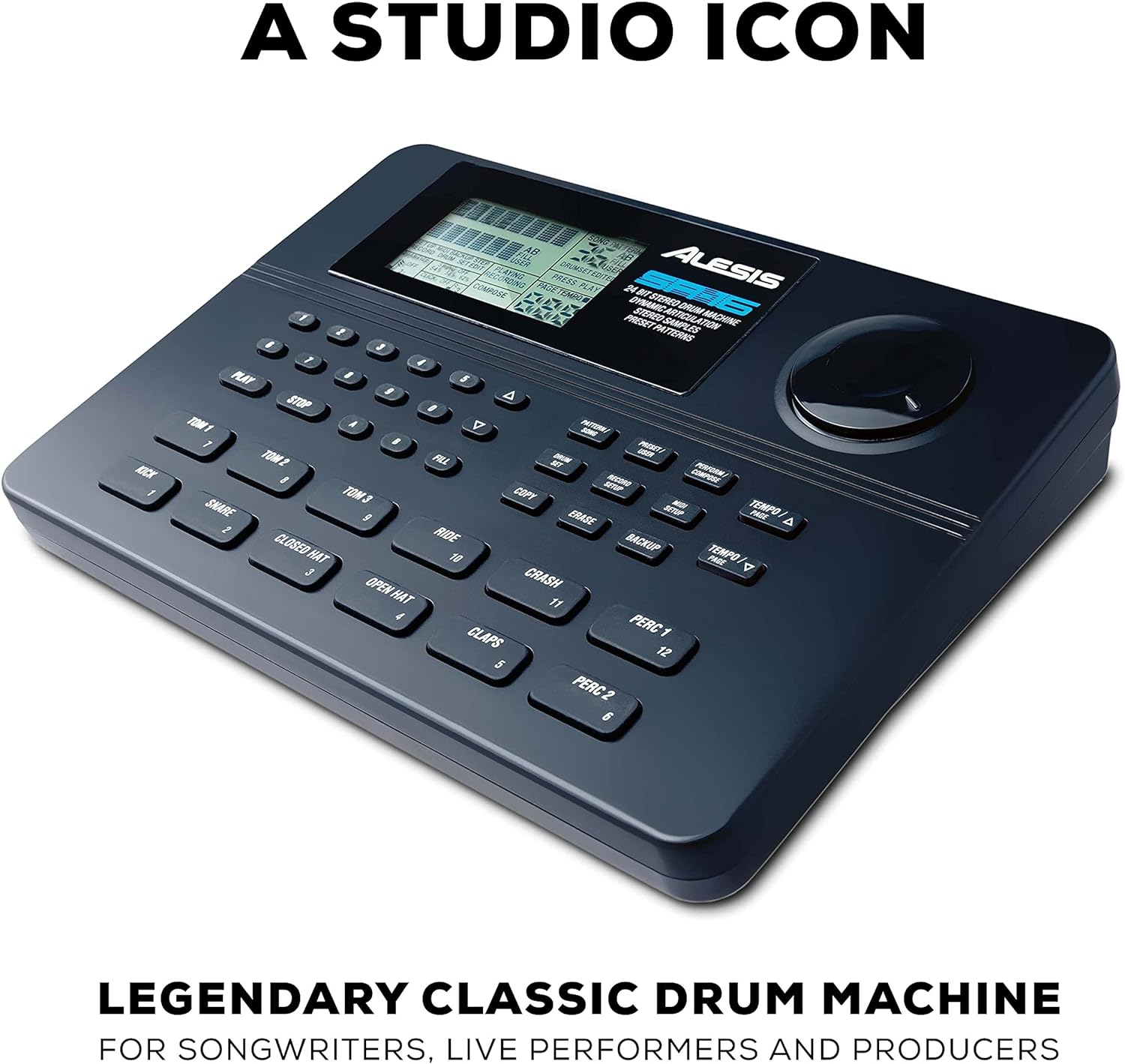
What it does well: The SR-16 ships with 233 onboard sounds drawn from real drum recordings. For bands and singer-songwriters who need acoustic-sounding drums rather than electronic synthesis tones, this library is immediately useful. The pattern creation workflow supports both Pad and Step modes, and Sound On Sound’s SR-16 retrospective notes that once the interface is internalized, building and queuing patterns for a live set becomes fast enough to execute mid-performance without looking down at the unit.
The output situation is also a genuine professional advantage. The SR-16 provides 1/4-inch stereo outputs—the standard connector used on professional PA systems, mixing boards, and live sound rigs. You plug it in with the same cable as a guitar. No adapters needed.
Where it shows its age: The SR-16 offers minimal sound editing. You are mostly selecting from the preset library rather than sculpting tones. If you want to tweak filter cutoff, apply per-voice compression, or build a sound from scratch, this is not your machine. It is a sample player with a pattern sequencer, and its feature set reflects its early-1990s design lineage.
The honest verdict on “is it outdated?” Sound On Sound’s retrospective framing is useful here: outdated implies something better has replaced it at its price point and use case. For bands that need reliable, realistic drum patterns from a box with professional outputs, the SR-16 holds its position on practical grounds. It is dated in features but not outdated in function.
Korg
$129.98
In stock on Amazon
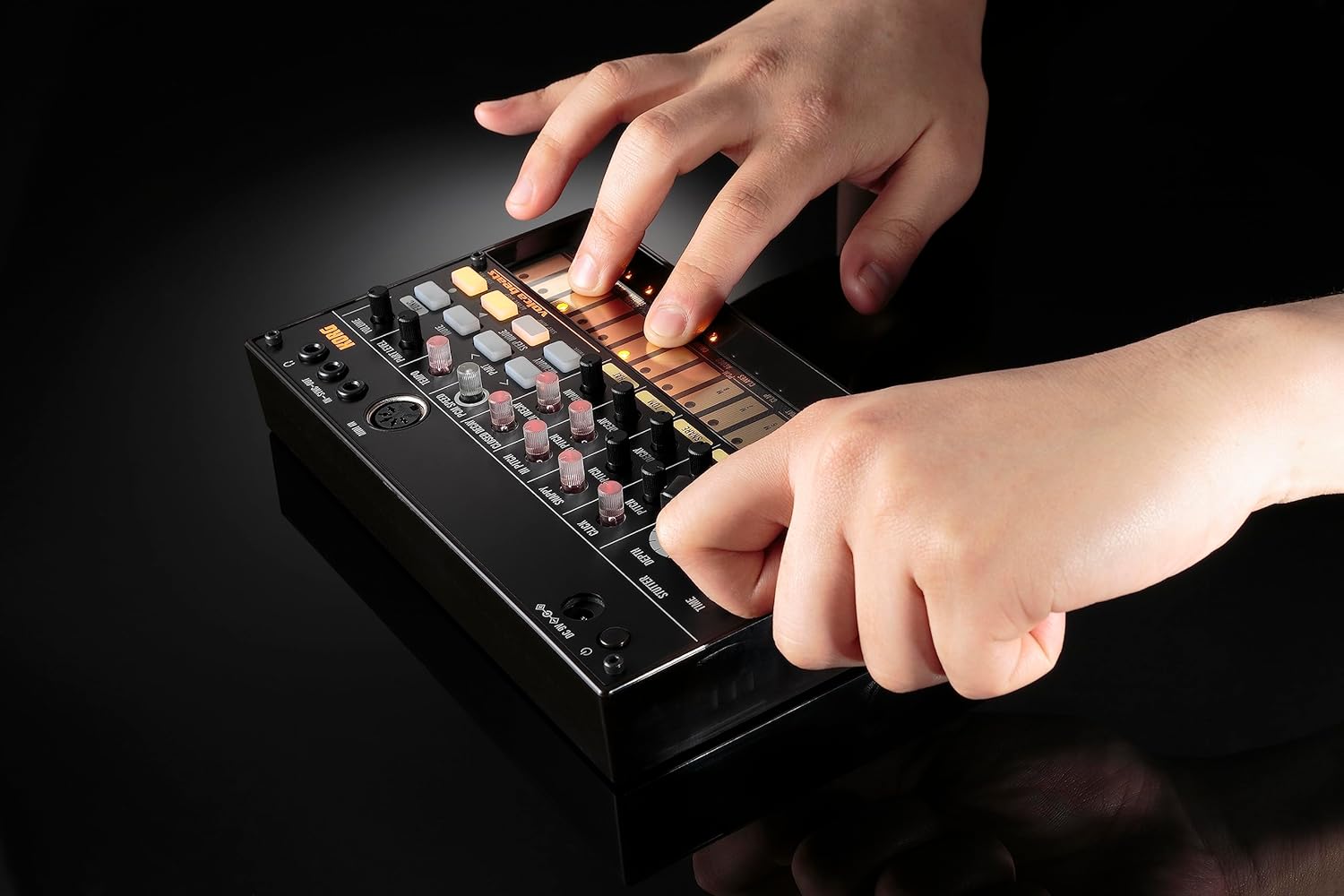
Check price on AmazonKorg Volca Beats: The Pocket Analog That Hits a Wall
The Volca Beats earns its reputation as a beginner-friendly analog drum synthesizer by being genuinely immediate to use. The step sequencer is visual and intuitive—you see the pattern, you press buttons to add hits, and you hear results fast. MusicRadar’s Volca Beats review and Perfect Circuit’s Korg Volca series buyer guide both highlight its analog voice architecture as giving the kick and snare a warmth that digital sample-based machines at the same price do not replicate.
The analog question, answered plainly: The Volca Beats is partially analog. The kick, snare, tom, and hi-hat voices use analog synthesis circuits. The clap and cowbell use PCM samples—recorded digital files. Korg describes this hybrid architecture in its product documentation, making it more accurate to say the machine is “analog-voiced for its primary voices” rather than fully analog. This matters because you can tweak the tone of the kick by turning a physical knob and hear the circuit respond in real time—a meaningfully different creative experience than adjusting a sample pitch.
Battery life in practice: Owners and reviewers consistently report approximately 5–8 hours of runtime on six AA batteries under normal use. That is enough for a writing session or a short gig, but performers who use the Volca Beats regularly for live work typically keep a set of rechargeable AAs on hand as standard practice.
The wall that owners hit: Once you outgrow the Volca Beats, the price jump to the next competitive option is steep. Perfect Circuit’s Volca buyer guide coverage acknowledges this gap: there is effectively no machine sitting between the Volca Beats and instruments priced significantly higher that solves the specific limitations—more individual outputs, deeper pattern memory, expanded MIDI implementation—that drive users to move on. You either accept its constraints or you spend considerably more.
Alesis
$159.00
In stock on Amazon
Check price on AmazonRoland TR-08: The 808 Recreation That Almost Gets It Right
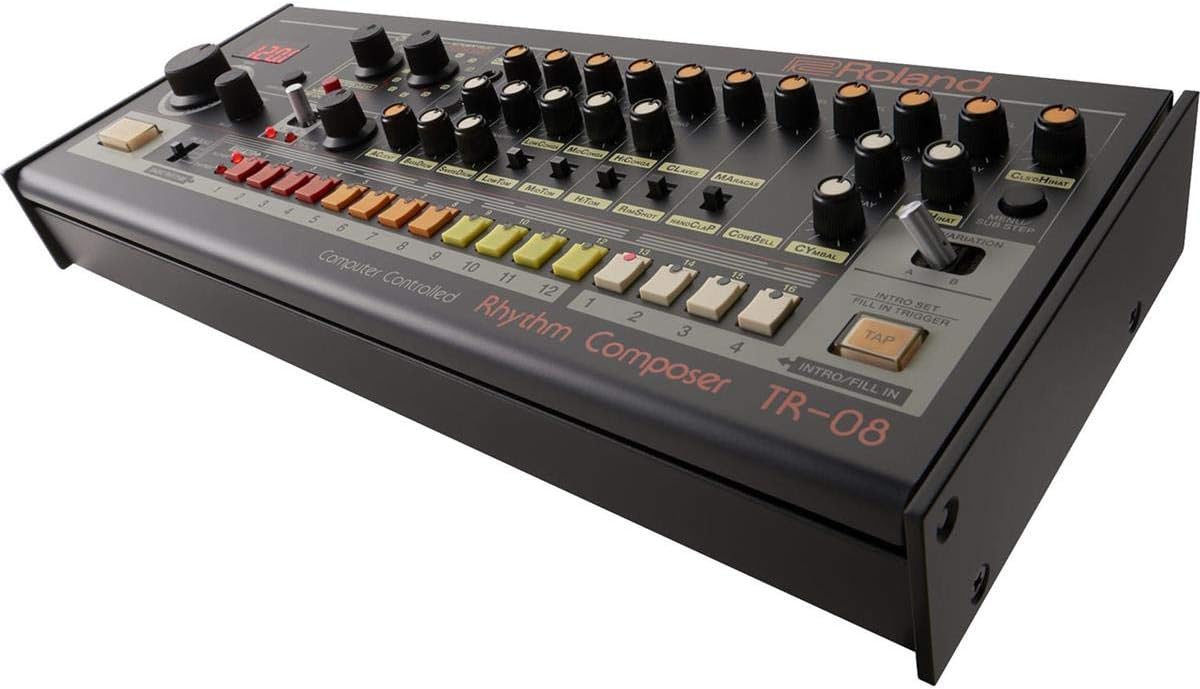
The TR-08 is Roland’s attempt to make the sound and workflow of the original TR-808—a machine whose used-market price has climbed well above $3,000 in 2026—accessible at a fraction of the cost. For what it is, it largely succeeds. Sweetwater’s Roland TR-08 product overview describes the ACB modeling as a faithful recreation of the 808’s voice character, and the assessment across professional review coverage is that it is convincing enough for the vast majority of production and live use contexts.
Does it sound identical to a real TR-808? The informed consensus, reflected in coverage by both Sweetwater and Synthtopia, is: close, but not identical. The ACB recreation captures the character and the signature sounds—the deep 808 kick, the snappy snare, the distinctive cowbell—with enough accuracy to satisfy most songwriters and producers. Engineers who have worked extensively with original 808 hardware sometimes identify subtle differences in analog saturation behavior and voice interaction. For most buyers, this distinction is academic rather than practical.
The output problem that matters for live performers: The TR-08’s main stereo output is a 1/8-inch (3.5mm) mini jack—the same physical format as a phone headphone port. In a live performance context, connecting to a PA, a DI box, or a mixing board requires either an adapter or a dedicated 1/8-inch-to-1/4-inch cable. In a studio, this is a minor inconvenience. At a venue, in low light, under time pressure, it is a friction point that Sweetwater’s product documentation and experienced reviewers are careful to flag. It is a real-world limitation worth factoring in if you plan to use the TR-08 on stage regularly.
The TR-08 also includes individual outputs via a breakout cable, which is a significant advantage for studio work where you want to process each voice independently through a DAW or hardware effects chain. For studio composers and producers, this largely offsets the connector limitation.
Roland TR-08
$494.99
In stock on Amazon
Check price on AmazonA Note on the Arturia DrumBrute Impact
This comparison would be incomplete without acknowledging the machine that sits just outside this trio and attracts a distinct buyer. Synthtopia’s DrumBrute Impact feature coverage highlights its appeal to performers who want to use the drum machine not just for its own sounds but as a MIDI clock source to drive external hardware. One commonly described use case in that coverage involves using the DrumBrute Impact to send MIDI clock to other devices in a live rig, blending the Impact’s own analog voices with sounds from synced external modules. If MIDI-driven external sync is central to your workflow, the DrumBrute Impact belongs in your comparison set before you commit to any of the three machines above.
The Decision Framework: If X, Then Y
Here is where the tradeoffs resolve into concrete decisions.
If you play live with a band and need to plug directly into a PA without adapters: The SR-16 is the practical choice. Its 1/4-inch outputs are immediately compatible with professional live sound rigs. At used-market prices, it delivers the best cost-per-gig value in this comparison. Consider this the Korg — $129.98 for working bands.
If you’re a songwriter writing acoustic-flavored or genre-neutral songs and need drum variety quickly: The SR-16’s 233-sound library gives you the most immediate options without any sound design overhead.
If you’re a bedroom producer learning synthesis and want to hear analog circuits respond to your knob turns in real time: Start with the Volca Beats. Accept its limitations as part of the learning process, and budget for a more capable machine within 12–18 months when you hit the ceiling.
If you produce hip-hop, trap, lo-fi, or any genre where the TR-808 kick is foundational to your sound: The TR-08 is the right tool. The ACB recreation is close enough for almost all production contexts, and the studio output options make it a legitimate session workhorse. Factor in a quality 1/8-inch-to-1/4-inch cable for live use from day one.
If your workflow depends on syncing hardware together and driving external devices via MIDI: Evaluate the Arturia DrumBrute Impact, as covered by Synthtopia, before committing to any of the three machines above.
The honest summary: none of these machines is wrong. Each is correct for a specific set of constraints. Define your output format, your primary use case (live vs. studio vs. writing), and your genre’s sonic requirements—and the decision largely makes itself.
Frequently Asked Questions
Is the SR-16 still worth buying in 2026 or is it outdated? For bands and singer-songwriters who need realistic drum patterns from a box with professional outputs, Sound On Sound’s SR-16 retrospective and current owner consensus agree that nothing has replaced it at its used-market price point. It is old in design but durable and functional. For electronic music production or synthesis-forward work, it is genuinely limited.
Is the Volca Beats actually analog or just analog-voiced? It is partially analog. The primary drum voices—kick, snare, tom, hi-hat—use analog synthesis circuits. The clap and cowbell use PCM digital samples. Korg markets it as an analog drum machine and discloses this hybrid architecture in its product documentation.
Does the Roland TR-08 sound identical to a real TR-808? Close, but not identical, according to the consensus across Sweetwater’s product coverage and Synthtopia’s comparative reporting. The ACB digital modeling is convincing enough for nearly all production contexts. Engineers with extensive real-808 experience sometimes note subtle differences in voice interaction and saturation character. For most buyers, the difference is not meaningful in practice.
Can the DrumBrute Impact send MIDI clock to sync other devices? Yes. Per Synthtopia’s DrumBrute Impact feature coverage and Arturia’s published specifications, the DrumBrute Impact sends MIDI clock via its MIDI output port, making it a capable clock source for syncing external synthesizers, sequencers, and effect units.
How long do Volca Beats batteries last in practice? MusicRadar’s Volca Beats review and owner reports consistently indicate approximately 5–8 hours of runtime on six standard AA batteries. Rechargeable AA batteries are the standard practical solution for performing musicians using the unit live.
Is the SR-16 pattern creation workflow fast enough for live use? Sound On Sound’s SR-16 retrospective and long-term owner accounts describe the workflow as learnable and fast once internalized. The machine supports both real-time and step-time pattern entry. The common critique is not speed but rather that the interface requires genuine familiarity before it becomes reliable under live performance pressure.