If you’ve ever wanted to grab a sound from the world around you—a door slam, a vinyl crackle, a chord you played on a keyboard—and immediately chop it, loop it, and build a beat, you’re describing the core appeal of a hardware sampler. A hardware sampler is a standalone electronic device that records audio, stores it, and lets you manipulate it into music without needing a laptop or music software. They’ve been central to hip-hop, electronic, and experimental music for decades. Today’s portable samplers are smaller and cheaper than ever, but picking the right one still takes some homework—because the Roland SP-404MKII, the Akai MPC Sample, and the Novation Circuit Rhythm disagree, sometimes violently, about what a good workflow looks like.
This article cuts through the noise. If you have a decision pending—cart open, gear fund allocated, trying to figure out which one won’t end up collecting dust—here’s the comparison you need.
| EDITOR'S PICKNovation Circuit Rhythm: Sample… | Mid-tierteenage engineering EP–133 K.O.… | Budget pickRoland SP-404MKII Creative Samp… | |
|---|---|---|---|
| Tracks | 8 sample tracks | — | — |
| Memory | — | 128MB | 16GB |
| Polyphony | — | — | 32-voice |
| Sample Slots | — | — | 160 |
| Mic built in | — | ✓ | — |
| Effects | — | ✓ | ✓ |
| Price | $399.99 | $329.00 | |
| See on Amazon → | See on Amazon → | See on Amazon → |
The Three Candidates at a Glance
By the numbers:
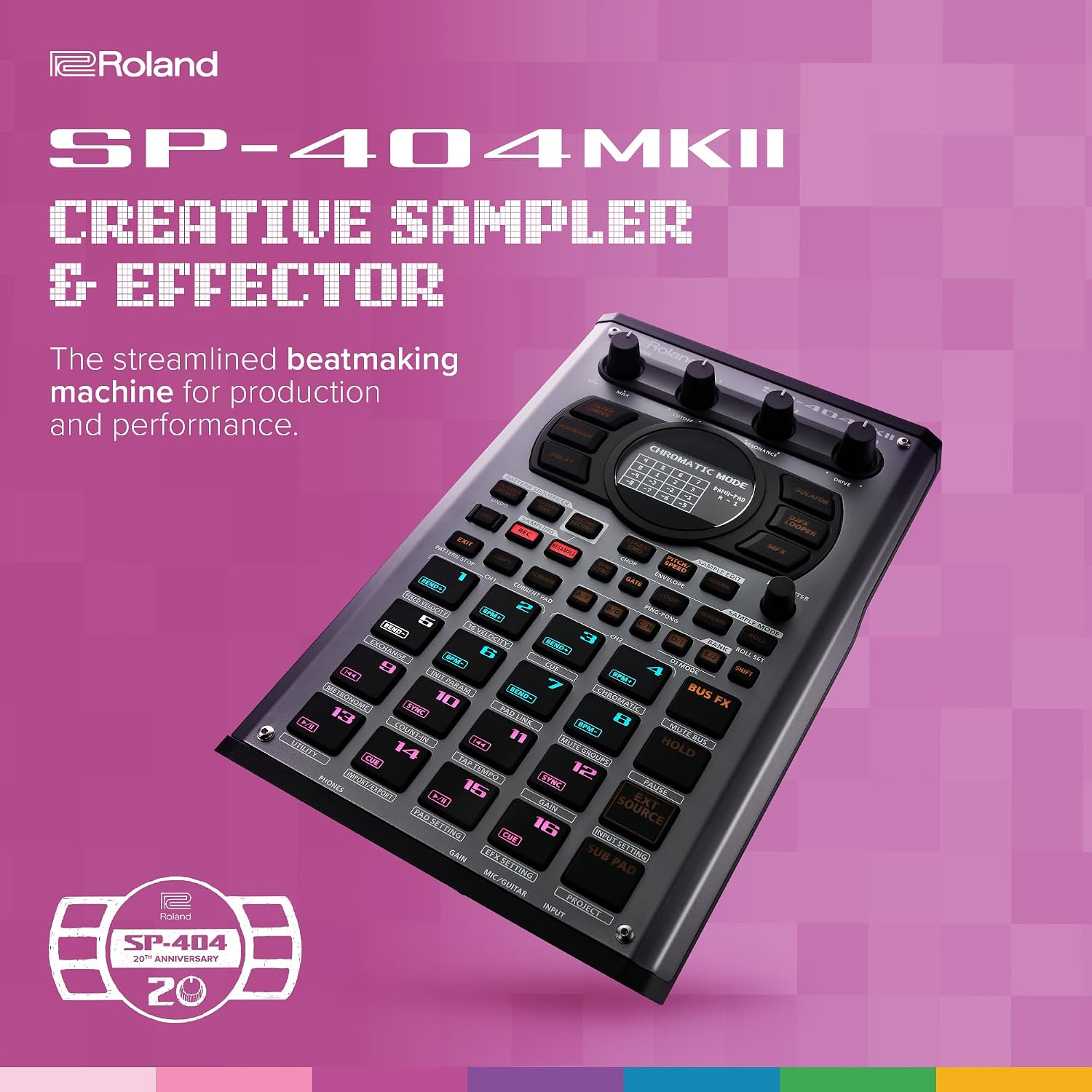
- Roland SP-404MKII — 32 pads, 16-track sequencer, onboard effects chain, ~$399 street (mid-2026)
- Akai MPC Sample — 16 pads, 8-track sequencer, built-in mic + USB-C audio interface, ~$199 street
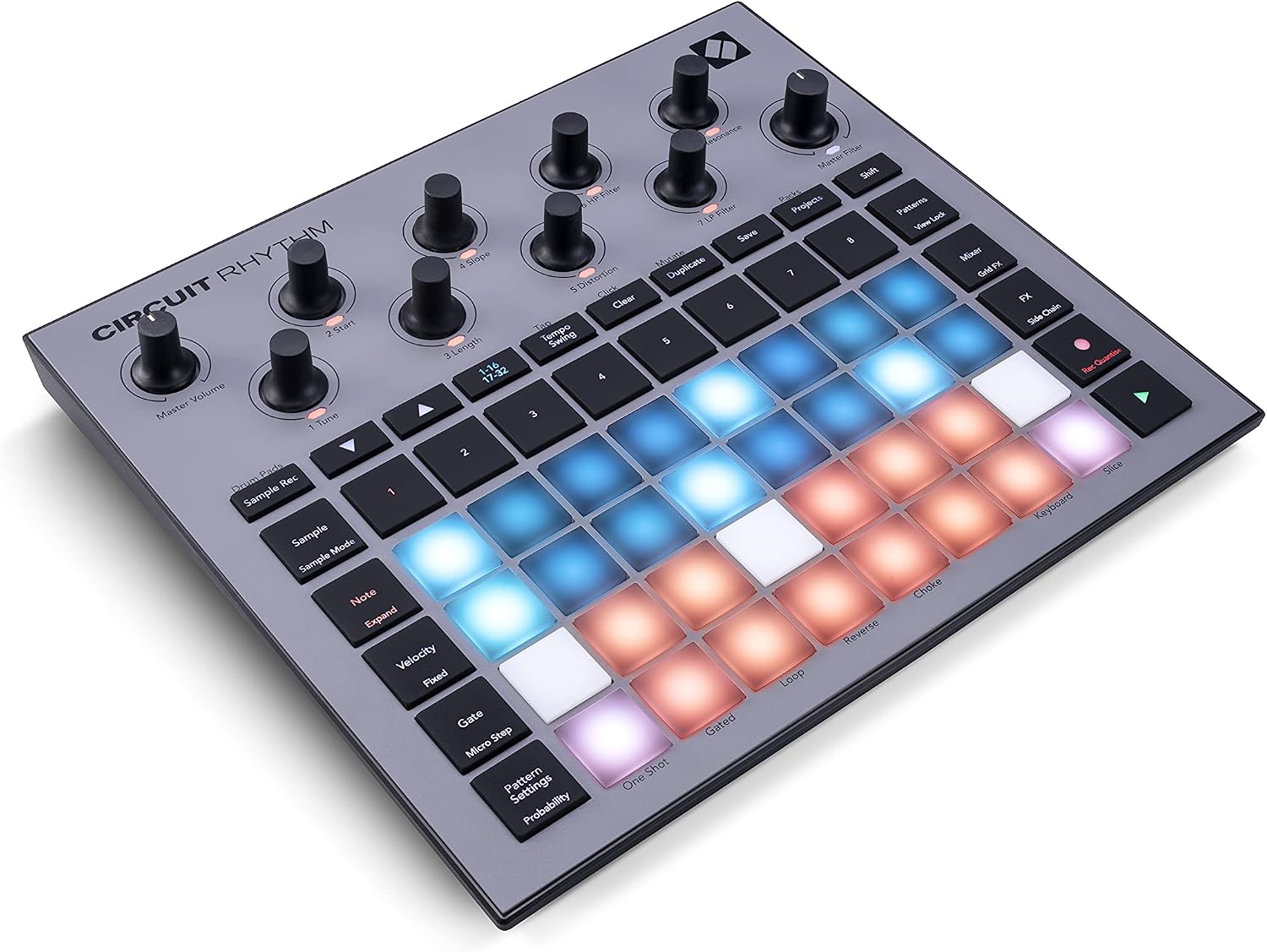
- Novation Circuit Rhythm — 8 tracks, 64-step sequencer, no screen, 6 dedicated sample banks per pattern, ~$299 street
All three are battery-capable and target the “produce anywhere” use case. That’s where the similarity ends. The sections below break each device into honest strengths, real tradeoffs, and a clear picture of who will actually thrive with it.
Head-to-Head: Three Samplers, Three Philosophies
Roland SP-404MKII: The Instrument You Grow Into
The SP-404MKII occupies a specific position in the community: it’s the sampler people describe in long-term relationship terms. Sound On Sound’s 2022 Roland SP-404MKII review called it “a genuine creative instrument rather than a utility device,” and that framing keeps resurfacing in owner conversations. Producers consistently describe still discovering new capabilities years into ownership—not the vocabulary you use about gear you mastered in a weekend.
What that translates to practically: the SP-404MKII has a learning curve that front-loads friction. The workflow is pad-centric and performance-oriented. You load samples to pads, you play pads, you layer effects in real time using the onboard FX chain—which includes Roland’s LOFI, BIT CRUSH, SCATTER, and ISOLATOR processors among others. Those effects are widely cited as a significant differentiator. Sound On Sound’s 2022 review specifically highlights the effects section as production-quality rather than decorative. Attack Magazine’s 2024 portable sampler workflow feature positions the SP-404MKII as the strongest choice when onboard processing is a priority.
The sequencer records your live pad performances, which means it rewards producers who think in terms of performance and improvisation rather than grid-based composition. If your instinct is “let me mess with this sound until something clicks,” the SP-404MKII matches that energy. If your instinct is “let me precisely program a 32-step pattern with velocity automation,” it will fight you at first.
Storage reality check: The SD card is the primary storage medium for the SP-404MKII, not internal flash memory. Most retail configurations ship with a 16GB card included. Owners report that 16GB handles dozens of projects comfortably, and cards are inexpensive to expand. The card is not optional for serious use—it is the workflow.
Who this is for: Producers who learn by doing, who want a long-term instrument rather than a utility box, and who are willing to invest weeks getting fluent before they’re moving fast. The depth is real, but it demands patience up front.
Novation
$399.99
In stock on Amazon
Check price on AmazonAkai MPC Sample: The On-Ramp That Doesn’t Embarrass You
The MPC Sample occupies a different emotional territory. CDM (Create Digital Music), in their 2023 MPC ecosystem deep-dive, described it as a deliberate entry point designed to honor MPC muscle memory without replicating MPC complexity. That’s exactly what owners report experiencing: MusicRadar’s 2023 Akai MPC Sample review specifically calls out the device’s ability to get producers moving quickly, with the familiar 16-pad layout removing the orientation tax that typically comes with new hardware.
The MPC Sample strips the classic MPC paradigm down to its essence—16 pads, an 8-track sequencer, and Akai’s familiar workflow logic—and adds two features that change the capture-and-produce loop in a meaningful way: a built-in condenser microphone and USB-C connectivity that doubles as an audio interface.
The built-in mic means you can sample literally anything in your immediate environment without carrying a separate interface or cable. MusicRadar’s 2023 review calls this out as enabling a genuinely portable sample-capture workflow—not just battery-powered production, but true untethered capture. You hear something interesting, you sample it, you chop it. The USB-C interface mode means the MPC Sample can route audio directly into a DAW, which matters for hybrid workflows where you want hardware character in a software session.
The honest tradeoff: The MPC Sample is not a full MPC One. The sequencer is shallower, the effects library is smaller, and the sample-editing capabilities are more limited. CDM’s 2023 MPC ecosystem coverage frames the MPC Sample as a standalone creative instrument rather than a scaled-down flagship—it does fewer things, but the things it does are clean and fast. Don’t buy it expecting a discounted MPC One experience.
Who this is for: Producers returning to hardware after time away, beginners who want a portable workflow that scales into the broader MPC ecosystem, and anyone who wants to capture samples without a separate interface as part of the rig.
Roland
In stock on Amazon
Check price on AmazonNovation Circuit Rhythm: The Screenless Sequencer That Surprises People
The Circuit Rhythm is the outlier in this comparison. It has no screen. That sentence tends to stop people, and it should—because the screenless paradigm is either the best thing about this box or a dealbreaker, depending on how your brain works.
Sweetwater’s Circuit Rhythm product overview describes it as a sample-based groove box with a unique color-coded LED interface—the diplomatic framing for a device where everything is communicated through button colors and patterns rather than menus and displays. Attack Magazine’s 2024 portable sampler workflow feature specifically highlights this as a strength in live performance contexts, noting that the moment a performer stops to navigate a screen is the moment they risk losing the room.
The Circuit Rhythm has six dedicated sample slots per pattern and an 8-track, 64-step sequencer that is more capable than its price suggests. The feature that consistently catches owners off guard is the resample-your-own-loops capability: you can record the Circuit Rhythm’s output back into itself, stacking and processing layers without external gear. The result is an instrument that rewards experimentation—a loop-based, iterative approach to production that some producers find more generative than precise step programming.
Owners report that the color-coded LED system feels disorienting for the first few sessions, but once the visual language is internalized, the screenless workflow becomes an advantage rather than a limitation. Sweetwater’s overview and Attack Magazine’s 2024 feature both reinforce this: the learning curve is front-loaded, and the payoff is a faster performance workflow than most menu-driven devices can offer.
The honest tradeoff: The Circuit Rhythm is a sequencer and performance tool first, a deep sample editor second. Precise sample manipulation—detailed chop points, nuanced envelope editing—requires either an external DAW or accepting the Circuit Rhythm’s relatively streamlined approach. It is a composer’s instrument, not a surgeon’s.
Who this is for: Live performers, loop-based producers, and anyone who thinks in patterns and wants gear that gets out of the way. If you’ve ever thought “I just want to play” and found yourself drowning in menus, the Circuit Rhythm was designed for you.
teenage
$329.00
In stock on Amazon
Check price on AmazonThe Decision Framework
Here’s how to cut through it:
If you want long-term depth and you’re willing to earn it: The SP-404MKII is the instrument that pays dividends over years. Sound On Sound’s 2022 review frames it as a creative instrument rather than a utility device, and community consensus consistently backs that up—it’s not fast to learn, but owners don’t regret the time invested.
If you want to be producing beats within an hour of opening the box: The MPC Sample gets you moving fastest, especially if you’ve used any MPC before. The built-in mic removes one more barrier between an idea and a recording.
If you produce live or hate looking at screens: The Circuit Rhythm’s screenless paradigm, once internalized, is faster than menus. The resample capability adds real depth for the price.
If budget is the primary constraint: The MPC Sample’s price point makes it the lowest-risk entry. If it doesn’t fit your workflow, you’ve lost less ground before pivoting.
Frequently Asked Questions
Can the MPC Sample work completely without a computer? Yes. The MPC Sample operates as a fully standalone device—you can record samples, build patterns, sequence tracks, and export audio without connecting to a computer. The USB-C connection adds DAW integration and audio interface capability, but it is optional.
Does the SP-404MKII require an SD card or does internal storage work for most users? The SD card is the primary storage medium for the SP-404MKII. While the unit has a small amount of internal storage, the SD card is how you store projects and sample banks in practice. Most retail units ship with a card included; 16GB handles real use comfortably, and larger cards are inexpensive.
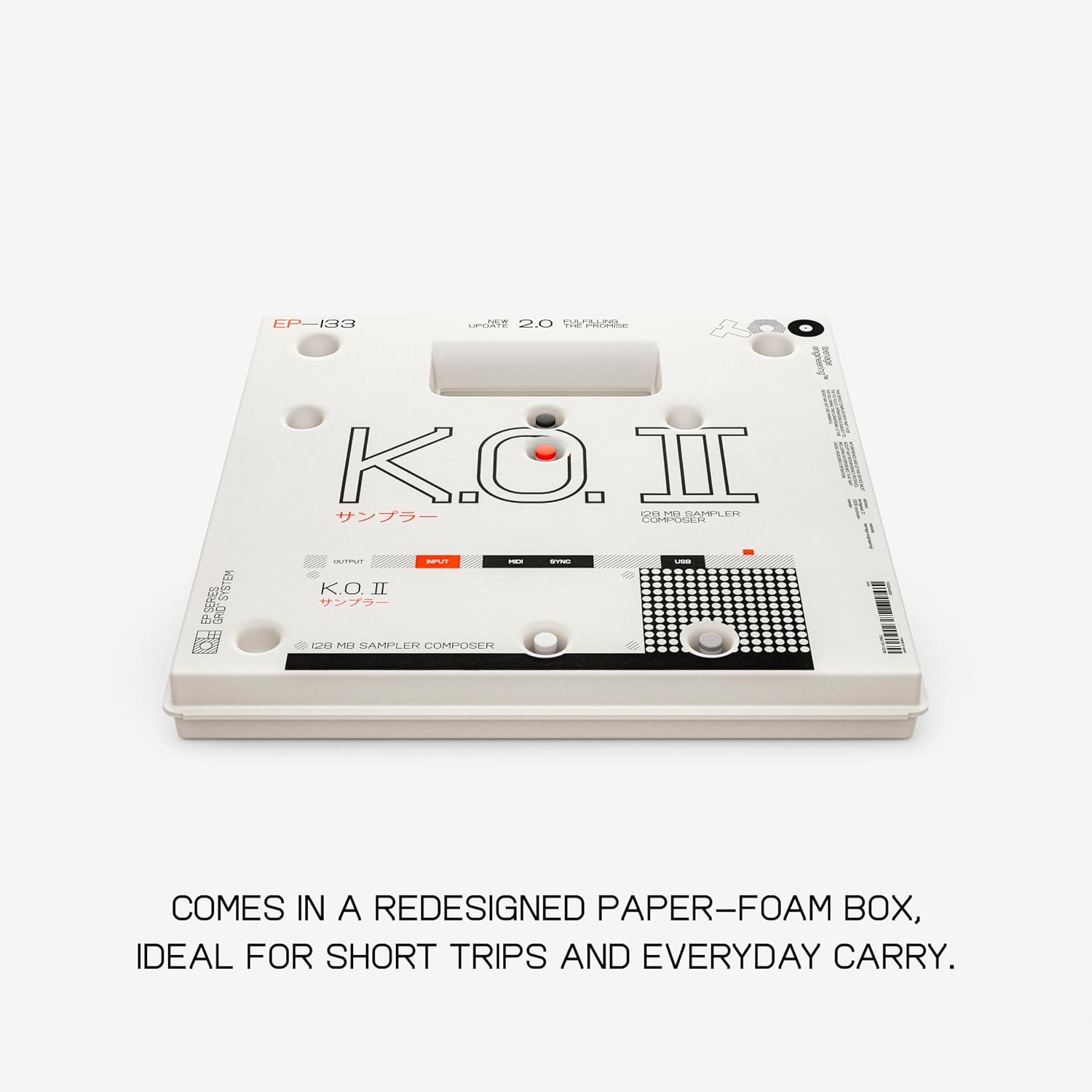
Can the EP-133 K.O. II record external samples or only its built-in mic? The Teenage Engineering EP-133 K.O. II—which didn’t make the main comparison here but comes up constantly in this category—can record external audio through its line input, not just the built-in mic. The manual is widely reported to be opaque, and video tutorials are effectively mandatory for unlocking its full workflow. Those who invest the time consistently describe it as a capable and distinctive sampling instrument.
Is the Circuit Rhythm difficult to use without a screen? The learning curve is front-loaded rather than ongoing. Owners report that the color-coded LED system feels disorienting for the first few sessions, but once the visual language is internalized, the screenless workflow becomes an advantage rather than a limitation. Attack Magazine’s 2024 portable sampler workflow feature specifically highlights this as a strength in live contexts where menu navigation interrupts momentum.
Can these samplers be used as audio interfaces for DAW recording? The MPC Sample has explicit USB-C audio interface functionality and can route audio into a DAW. The SP-404MKII can function as a USB audio interface in class-compliant mode. The Circuit Rhythm does not offer native audio interface functionality; audio extraction typically happens via its line outputs into a separate interface.
How does the MPC Sample compare to a full MPC One for beat making? The gap is real. The MPC One offers a larger touchscreen, deeper effects, more tracks, CV/gate outputs for modular integration, and more comprehensive sample editing. CDM’s 2023 MPC ecosystem deep-dive frames the MPC Sample as a standalone creative instrument rather than a scaled-down flagship, which is the right mental model: the MPC Sample does fewer things, but does them cleanly and quickly. It is not a discounted MPC One.