A groovebox is an all-in-one music-making device that combines a sequencer (a step-by-step pattern programmer), drum sounds, and often synth voices in a single box—no computer required. When that box runs on batteries, you have a portable groovebox: a self-contained studio you can take on a plane, use in a park, or drop into a backpack between gigs. This category has expanded dramatically over the last several years, and the options now range from sub-$200 novelties to $2,000 professional instruments. The four devices in this article—the Roland T-8, the Sonicware Liven CyDrums, the Yamaha SEQTRAK, and the Teenage Engineering OP-1 Field—represent four very different philosophies about what “portable” should mean and who it should serve. If you have one of these on your shortlist right now, here is everything the owner community and review record have surfaced, organized so you can make the call.
| EDITOR'S PICKteenage engineering OP-1 field… | Mid-tierSonicware Liven Evoke [Acoustro… | Budget pickRoland AIRA Compact T-8 BEAT MA… | |
|---|---|---|---|
| Battery Power | — | ✓ | — |
| Built-in Speaker | ✓ | ✓ | — |
| Microphone | ✓ | — | — |
| Sequencer Type | — | — | TR-REC |
| Synth Engine | — | Acoustronic | — |
| Effects | ✓ | Granular | ✓ |
| Price | $1,999.00 | $279.00 | $249.99 |
| See on Amazon → | See on Amazon → | See on Amazon → |
The Honest Framing: What These Four Devices Actually Are
Before running the comparison, it helps to name a structural problem with this category: onboard speakers. Reviewers across the portable groovebox market consistently flag that built-in speakers are too quiet for practical use in anything noisier than a silent room. This is not a per-product complaint; it is a category-wide condition. CDM (Create Digital Music), in its Sonicware Liven series feature, surfaces this frustration explicitly, and the pattern holds across aggregated owner accounts for the Korg Volca Drum and Teenage Engineering Pocket Operator series as well. Plan your purchase around headphones or a portable speaker as a required accessory, and you will not be disappointed. Plan around the onboard speaker as your primary output, and you almost certainly will be.
With that baseline set, here is how the four contenders actually differ.
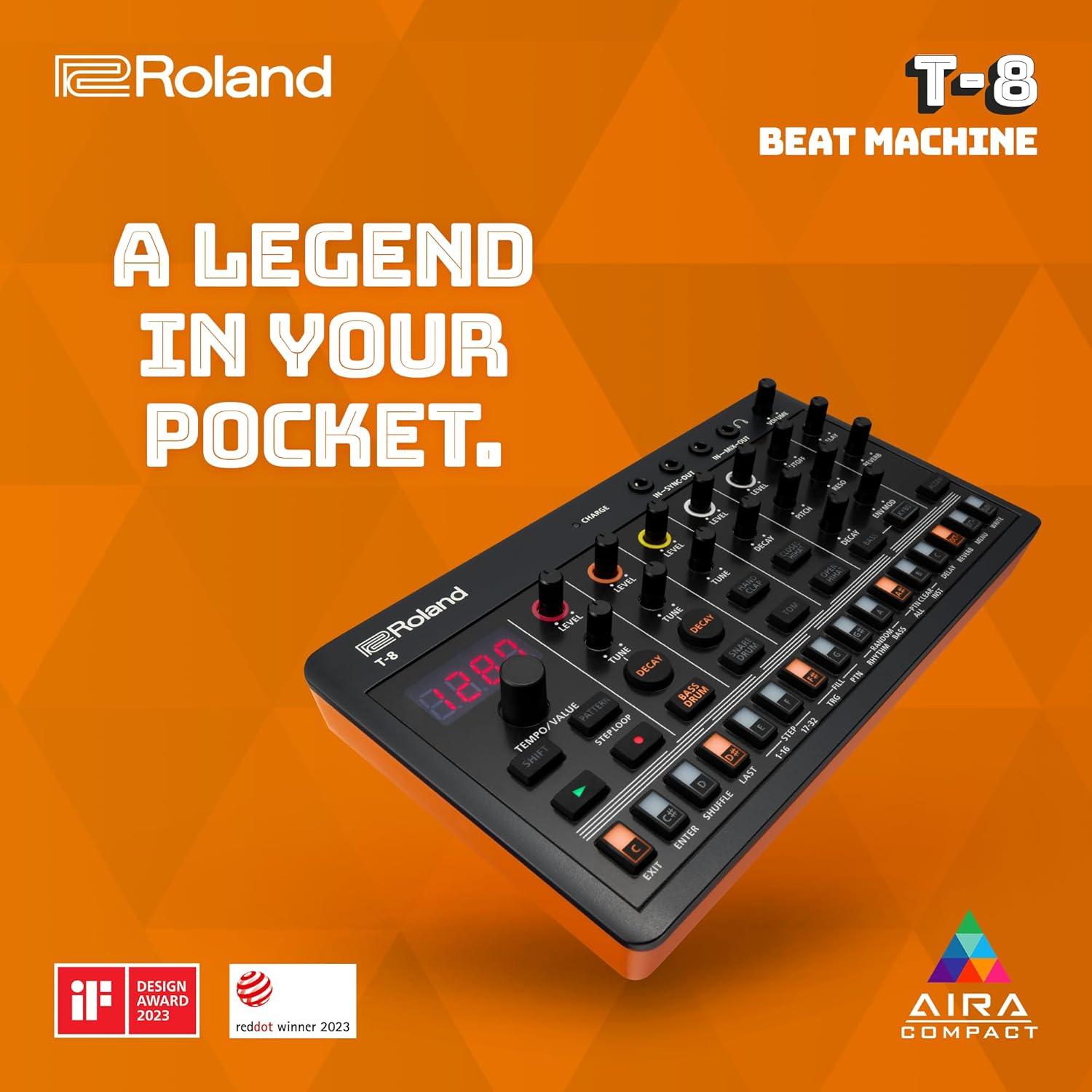
Roland T-8 is a battery-powered rhythm machine and bass synthesizer that draws directly on Roland’s TR-808 and TR-909 drum machine heritage. The TR-808 (released 1980) and TR-909 (1981) are the two most influential drum machines in electronic music history. The T-8 packages ACB (Analog Circuit Behavior) modeling of both into a unit that fits in a laptop bag.
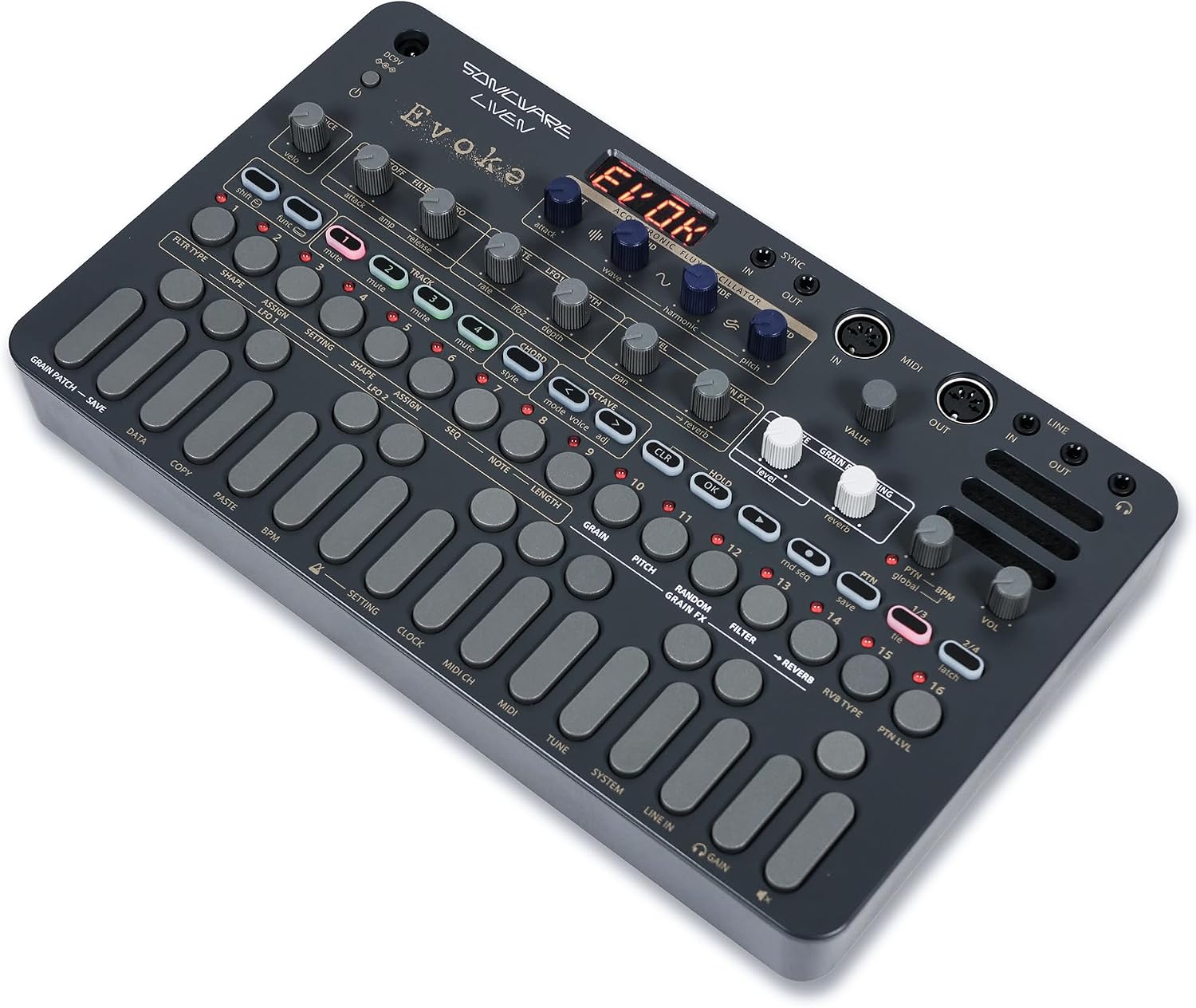
Sonicware Liven CyDrums is a standalone percussion synthesizer—and the distinction matters enormously, as explained below. It generates sounds through synthesis algorithms, not recorded samples.
Yamaha SEQTRAK is a multitrack sequencer and sound engine designed as an instrument hub, with synth voices, drum tracks, and connectivity features that let it sit at the center of a small portable rig.
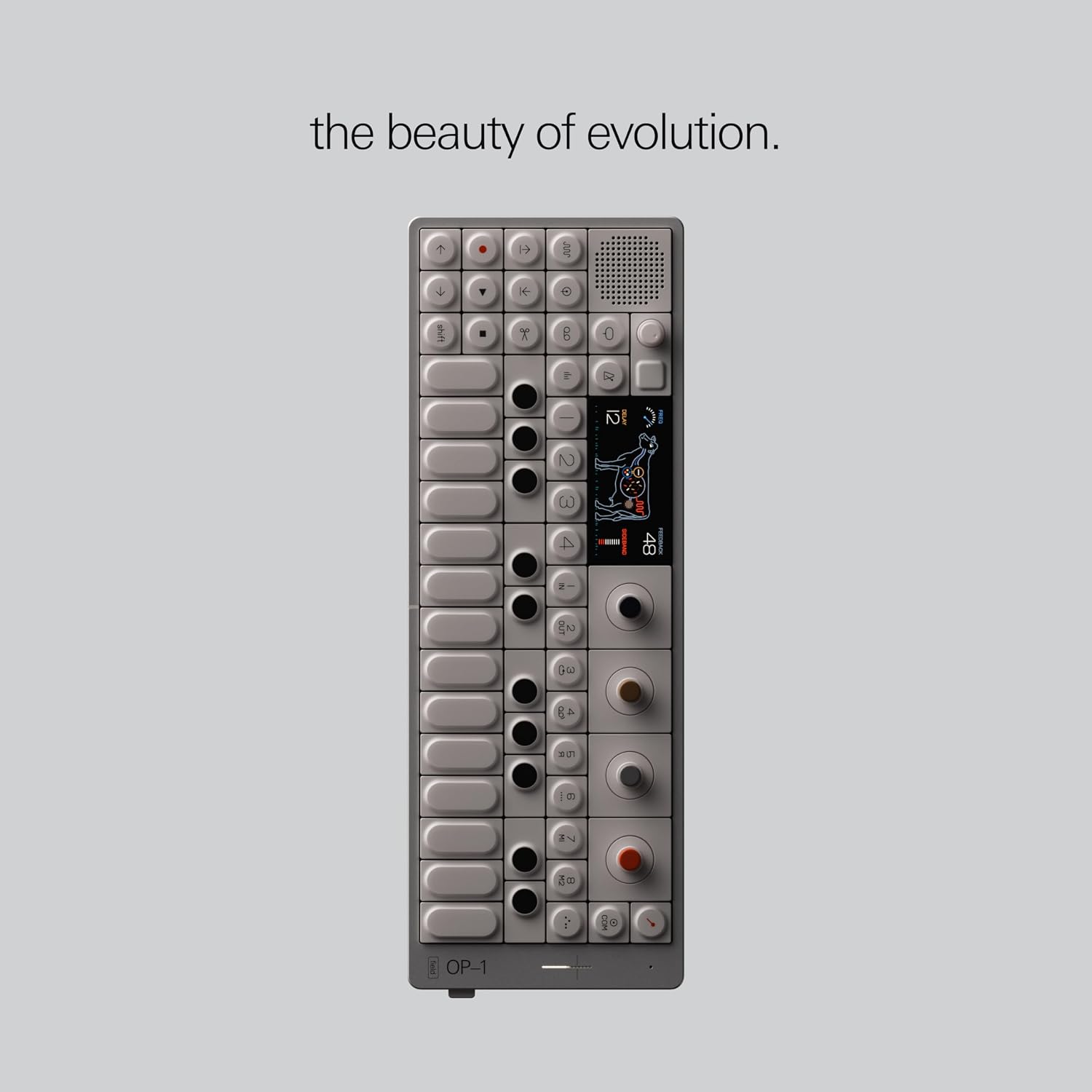
Teenage Engineering OP-1 Field is the second generation of TE’s flagship portable synthesizer, sampler, and sequencer. It is the most expensive and most capable device in this comparison by a significant margin.
By the Numbers
| Device | Battery Life (Mfr. Rated) | Built-in Speaker | Street Price (2026) | Weight |
|---|---|---|---|---|
| Roland T-8 | ~5 hours (AA batteries) | Yes (low volume) | ~$299 | ~590g |
| Sonicware CyDrums | ~7 hours (AA batteries) | Yes (low volume) | ~$179 | ~390g |
| Yamaha SEQTRAK | ~5 hours (USB-C battery) | Yes (low volume) | ~$349 | ~430g |
| OP-1 Field | ~20 hours (internal Li-Ion) | Yes (improved, still limited) | ~$1,999 | ~460g |
Battery ratings are manufacturer-stated figures. Real-world variation depends on output level, connected devices, and sequencer complexity. The OP-1 Field’s 20-hour rating is the consistent community outlier—multiple long-form owner accounts corroborate it as genuinely exceptional.
Device-by-Device Decision Frame
Roland T-8: The Touring Musician’s Utility Player
The T-8 occupies a confident middle ground. Roland’s ACB modeling of the 808 and 909 is well-regarded: Sound On Sound, in its Roland T-8 review (2023), describes the synthesis engine as faithful to the source material in ways that simpler sample-playback units are not. The sequencer is a direct descendant of Roland’s classic step-time programming interface, which means muscle memory from any TR-series machine transfers immediately.
What makes the T-8 stand out in this comparison is the credibility of its portability claims. Owner accounts describe using it on planes, trains, and during international travel—not just as a “technically portable” device but as one people actually carry and use in transit. The AA battery format (no proprietary charger required) is part of why: replacement batteries are available in airports, convenience stores, and hotel lobbies anywhere in the world. For touring musicians or frequent travelers, that operational reality matters more than it might appear on a spec sheet.
The tradeoff is scope. The T-8 is a rhythm machine and bass synth. It does not pretend to be a full synthesizer, a sampler, or a compositional environment. If your use case is “I want to make 808-style beats in transit and route them into a DAW later,” the T-8 is extremely well-matched. If you want a device that can handle melodic composition, synthesis programming, or sample manipulation, it runs out of road quickly.
Best for: Traveling producers who need a reliable TR-flavored rhythm machine with AA battery compatibility and minimal operational complexity.
Roland
$249.99
In stock on Amazon
Check price on AmazonSonicware Liven CyDrums: Synthesis Engine, Not Sample Player
The CyDrums is the most frequently misunderstood device in this comparison, and the confusion comes from a specific expectation gap: you cannot load your own sounds into it. CDM (Create Digital Music), in its Sonicware Liven series feature (2022), makes this explicit, and owner reviews reflect genuine frustration from customers who expected a sample-based drum machine and received a synthesis-based one instead. These are fundamentally different tools.
What the CyDrums actually is: a dedicated percussion synthesizer with a range of synthesis algorithms—analog-modeled, physical modeling, and FM-influenced—that generate drum tones from scratch. For producers who want to sculpt sounds at a parameter level, shaping attack, decay, pitch envelope, and noise character, this is a strength rather than a limitation. The synthesis architecture gives it sonic flexibility that sample players cannot match. But “I want to load my own 909 samples” is a workflow the CyDrums explicitly does not support.
Battery life is the strongest practical argument in its favor: the AA-powered format and Sonicware’s efficient architecture produce run times that exceed both the T-8 and the SEQTRAK. At its price point, it is the most cost-effective dedicated percussion synthesis voice available in a battery-powered format.
The sequencer is functional but basic. The CyDrums works best as a sound generator and standalone percussion voice, not as the compositional center of a complex arrangement.
Best for: Sound designers who want synthesis-based percussion at a low entry price, understand they are buying a synthesizer and not a sampler, and are comfortable routing it into a larger setup.
Roland
$249.99
In stock on Amazon
Check price on AmazonYamaha SEQTRAK: Buy It With Firmware 2.0 Installed, or Don’t Buy It Yet
The SEQTRAK has the most polarized reviewer personality in this comparison, and the split is almost entirely explained by one variable: whether the buyer has installed the 2.0 firmware update.
Firmware is software embedded in the hardware itself—it controls how the device behaves and can be updated by the manufacturer after purchase. Yamaha released a significant 2.0 update for the SEQTRAK that addressed core workflow and stability issues present at launch. Sweetwater’s SEQTRAK product page and buyer Q&A section (2024) reflects this division clearly: reviewers running 2.0 describe the device as a genuinely capable multitrack groovebox with strong connectivity features and a useful synth section. MusicRadar’s SEQTRAK review (2023), published close to the original launch, captures the pre-update frustration that many early buyers experienced; post-update community sentiment is meaningfully more positive.
This is a non-negotiable callout: If you purchase a SEQTRAK from used market inventory or older new-old-stock, verify that 2.0 is installed before forming any judgment about the device. The pre-update and post-update SEQTRAK are functionally different instruments.
On its merits with current firmware: the SEQTRAK’s strength is connectivity and multi-voice flexibility. It handles synth parts, drum tracks, and external device integration in ways the T-8 and CyDrums do not attempt. It is the right device for producers who want a portable hub that can coordinate a small live rig.
The display is central to the workflow—multiple owner accounts confirm that navigating the SEQTRAK effectively requires engaging with the screen. This is not a “play by feel” instrument in the way a simple step sequencer might be.
Best for: Producers who want a multitrack portable hub with synth and drum voices, need external device connectivity, and will confirm 2.0 firmware is installed before use.
Sonicware
$279.00
In stock on Amazon
Check price on AmazonOP-1 Field: The Generational Upgrade Debate
The OP-1 Field is in a category by itself on price, and the community knows it. At roughly $1,999, it costs more than the other three devices combined. What it offers in return: a genuinely deep synthesis and sampling environment, a world-class sequencer with multiple modes, stereo audio I/O, a built-in FM radio, tape-loop recording, and—most practically—a manufacturer-rated 20-hour battery life that owner accounts across multiple long-form reviews consistently support as real-world accurate.
Synthtopia, in its Teenage Engineering OP-1 Field overview (2022), highlights the audio quality improvement over the original OP-1. Perfect Circuit’s OP-1 Field product notes (2023) similarly emphasize the higher-quality converters and more refined stereo signal path. For producers who care about final output quality—recording to tape, stereo resampling, live performance capture—this improvement is audible and meaningful.
The upgrade debate is more complicated for existing owners. Original OP-1 owners who have evaluated the Field consistently describe the sound quality improvement as genuine but debate whether it justifies the price delta from an already-owned, functional unit. The consensus from that specific sub-group leans toward: if your original OP-1 is in good working condition and your workflow is established, the Field is a luxury upgrade, not a necessity. If you are buying your first OP-1, there is no version of this argument that favors the older unit—the Field is the one worth owning new.
Best for: Producers who want the most capable portable synthesis and sampling environment available in this form factor, for whom battery life is a primary consideration, and for whom the price is within budget.
teenage
$1,999.00
In stock on Amazon
Check price on AmazonFrequently Asked Questions
Do any of these devices have speakers loud enough to use without headphones? Practically, no—not in any environment with ambient noise. CDM’s Sonicware Liven series feature documents this pattern, and it holds across the portable groovebox category broadly. Budget for headphones or a portable Bluetooth speaker as a required part of your rig regardless of which device you choose.
Does the Yamaha SEQTRAK require a screen to operate effectively? Yes. Multiple owner accounts confirm the screen is central to navigation. The SEQTRAK is not designed for eyes-closed, tactile-first operation. If you need a device you can run without looking at a display, the T-8 or a simpler step sequencer will serve you better.
Can the Sonicware CyDrums load custom samples? No. As CDM’s Sonicware Liven series feature makes clear, the CyDrums is a synthesis-based percussion engine—it generates sounds algorithmically and does not accept user-loaded samples. If your workflow depends on your own sample library, this device is not the right tool.
Is the OP-1 Field worth upgrading to from the original OP-1? The community consensus among original OP-1 owners: the audio quality improvement is real, but if your existing unit is functional and your workflow is established, it is a luxury upgrade rather than a mandatory one. Synthtopia’s OP-1 Field overview and Perfect Circuit’s product notes both corroborate that the Field’s improvements are substantive—but “substantive” and “necessary” are different judgments. For first-time buyers, the Field is the clear choice.
Which of these has the longest real-world battery life? The OP-1 Field, by a significant margin. The manufacturer-rated 20-hour figure is corroborated by owner accounts across multiple long-form reviews. The T-8 and CyDrums both benefit from the AA battery format’s global availability, even if raw run time is shorter. For travel specifically, the AA format may matter more than total hours.
Does the Roland T-8 include a full TR-808 or TR-909 kit? The T-8 models both the TR-808 and TR-909 drum voices through Roland’s ACB (Analog Circuit Behavior) engine—it recreates the circuits, not the samples. However, it is a curated selection of voices from those machines, not an exhaustive recreation of every parameter from both units. Sound On Sound’s Roland T-8 review (2023) provides the clearest published account of which voices are modeled and how faithfully.