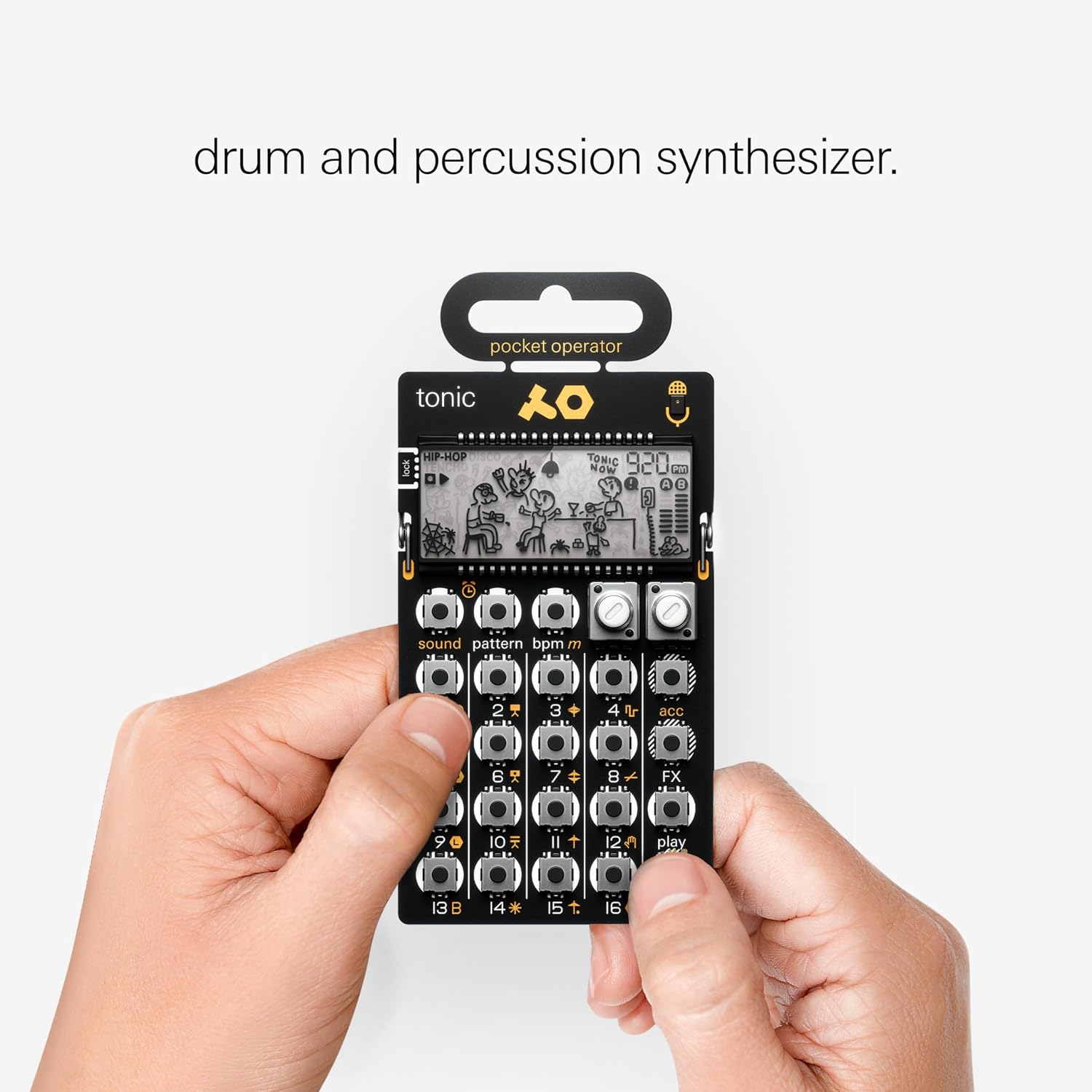
Teenage Engineering makes gear that looks like it fell out of a Scandinavian design museum, but underneath the minimalist aesthetic there are real decisions buried in every button. If you’re new to the brand: Pocket Operators (POs) are a line of credit-card-sized synthesizers and beat machines — stripped-down, bus-powered, and priced to remove every excuse not to start making music. The EP-133 K.O. II is a larger, more ambitious device from the same company: a sampler/sequencer that sits in a category by itself, somewhere between a Pocket Operator and a proper performance instrument. Both can make drums. Both cost a fraction of what a full hardware studio demands. But they are built on completely different philosophies, and picking the wrong one is an easy mistake to make. This guide maps out exactly what each device is, where each one shines, and gives you an honest decision framework so you know which belongs in your rig.
| EDITOR'S PICKteenage engineering EP–133 K.O.… | Mid-tierteenage engineering pocket oper… | Budget pickTeenage Engineering EP-1320 Med… | |
|---|---|---|---|
| Type | Sampler | Drum machine | Sampler |
| Memory | 128MB | — | — |
| Built-in mic | ✓ | — | ✓ |
| Parameter locks | — | ✓ | — |
| Price | $329.00 | $59.00 | |
| See on Amazon → | See on Amazon → | See on Amazon → |
What Each Device Actually Is
The PO-32 Tonic: A Synthesizer Disguised as a Toy
The PO-32 Tonic is a percussive synthesizer — meaning it generates drum sounds mathematically, using oscillators, filters, and envelopes, rather than playing back recordings. This is the same underlying principle as a Roland TR-808 or a Moog DFAM, compressed into an accessible price point. The engine inside the Tonic is a licensed version of Microtonic, a widely-respected drum synthesis plugin developed by the Swedish company Sonic Charge. That lineage matters: Microtonic has a devoted following among sound designers specifically because it models the character of analog circuitry without being locked to one era of sound.
The Tonic holds 16 synth drum patches across two banks, each patch a full percussion voice with its own parameters. You sequence those 16 sounds across a 16-step pattern. There are 16 patterns per bank. Crucially, you can transfer sounds from the Microtonic plugin to the hardware via audio — a patch synchronization method where the plugin encodes patch data as an audio signal, and the PO-32 decodes it. No USB, no proprietary cable.
MusicRadar’s review of the Teenage Engineering PO-32 Tonic praises the synthesis engine depth relative to price, noting that the device earns its place above simpler Pocket Operators in the line. Reviewers who own both the PO-32 Tonic and its predecessor the PO-12 Rhythm consistently note that the Tonic is not just different but meaningfully better — the synthesis engine produces deep, physical tones, particularly low-end kick and bass textures, that punch above the price in ways a sample player cannot replicate. One consistent thread among long-term Tonic owners documented in MusicRadar’s coverage is the value of step-lock, a feature that lets you lock individual sequencer steps to different parameter values, creating evolving rhythms without automation.
The EP-133 K.O. II: A Sketchbook for Full Arrangements
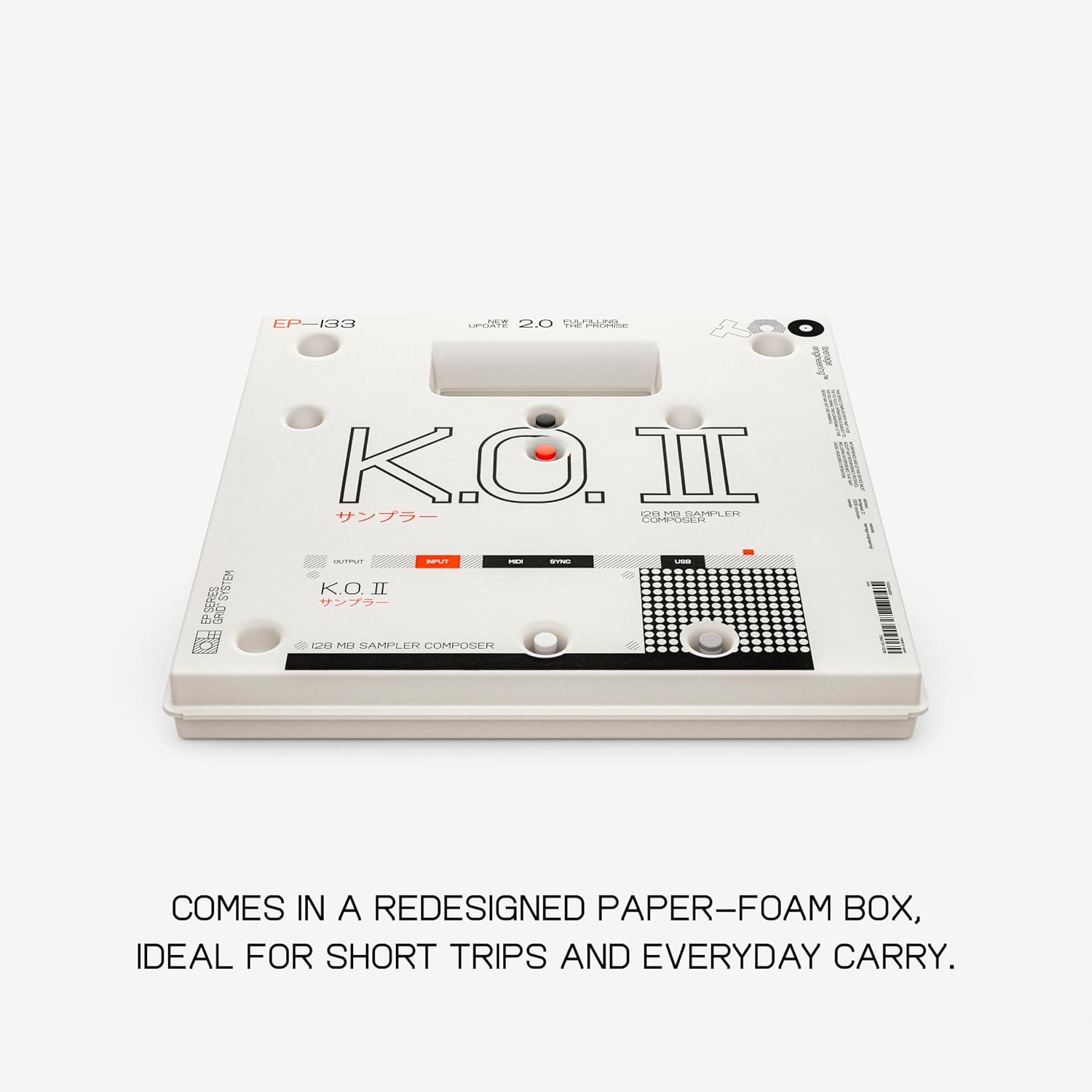
The EP-133 K.O. II is a different beast. It’s a sampler — it records audio from its built-in microphone or an external source, chops it up, assigns those samples to pads, and lets you sequence them. Think of it as the spiritual successor to early Akai and Boss sampling workstations, re-imagined through Teenage Engineering’s lens of joyful usability.
The K.O. II’s defining feature is its song mode, which lets you chain patterns together into complete arrangements — verses, breaks, drops, build-ups. Synthtopia’s hands-on overview of the EP-133 K.O. II highlights song mode as a key differentiator, noting that it gives the device a compositional arc that most small samplers lack. The word producers reach for most often when describing the EP-133 is sketchbook — the device captures ideas quickly and chains them into something that resembles a finished draft.
Sound On Sound’s review of the Teenage Engineering EP-133 K.O. II notes the performance and arrangement tools as the headline capabilities, while flagging that the sampling workflow — record, assign, sequence — carries a short but real learning curve. Reviewers who came from hardware samplers like the Akai MPC1000 consistently report that the EP-133 clicked within a session or two, even finding it surprisingly approachable given how different its interface looks.
Where the Philosophies Diverge
These are not two versions of the same idea. They represent genuinely different answers to the question of what a drum machine is for.
Sound design depth vs. capture speed. The Tonic rewards patience and intentional programming; getting a sound requires understanding what the synthesis parameters are doing. The K.O. II rewards instinct — if you hear something that sounds right, you can have it on a pad in seconds.
Portability vs. capability. The PO-32 runs on two AAA batteries and fits in a coat pocket. The EP-133 is notably larger, closer in footprint to a paperback book, but brings a built-in speaker, proper pads, and enough I/O to integrate with a larger rig.
Originality vs. reference. Synthesis-based drums are inherently original — the PO-32 sounds like itself. Sample-based drums can be anything you feed them, including a Juno-106, a snare mic, or an FM stab lifted from a record you love.
Sequencing scope. Both devices sequence patterns, but the K.O. II’s song mode is genuinely deeper. CDM’s Teenage Engineering hardware coverage frames the EP-133 as an arrangement tool as much as a sound source — a distinction that matters if you are trying to produce complete tracks rather than loops.
Head-to-Head: Three Use-Case Comparisons
H3: The Synthesis-First Producer
If your goal is to design drum sounds rather than borrow them — if the idea of a kick that exists nowhere else is appealing, and if you are comfortable with or excited about parameter-level synthesis — the PO-32 Tonic is the cleaner choice. Its Microtonic integration makes it a gateway into a deep and well-documented synthesis ecosystem. Per MusicRadar’s review of the Teenage Engineering PO-32 Tonic, owners who invest time in the plugin-to-hardware audio transfer workflow consistently unlock a level of sonic control that the price point does not suggest is possible. The synthesis engine’s low-end kick generation in particular is flagged repeatedly as a standout capability for an instrument at this price.
Teenage
In stock on Amazon
Check price on AmazonH3: The Arrangement-Focused Producer
If you work by ear, start with reference sounds or field recordings, and need to chain patterns into something that sounds like a track before the session ends, the EP-133 K.O. II is the correct choice. Sound On Sound’s review of the EP-133 K.O. II and Synthtopia’s hands-on overview both identify song mode as the device’s real competitive advantage — the feature that pulls it out of the “fun toy” category and into legitimate compositional tool territory. Perfect Circuit’s editorial notes on the EP-133 family describe song mode as the primary reason to choose the K.O. II over a simpler Pocket Operator for anyone whose workflow involves full track sketching.
teenage
$59.00
In stock on Amazon
Check price on AmazonH3: The Producer Who Already Has a DAW Sampler
If you already own a DAW-based sampler or a hardware MPC, the K.O. II’s highest value is as a standalone sketchpad or a stage instrument — not as a redundant sampler in a rig that already captures and chops. In that configuration, the Tonic’s synthesis engine fills a gap that existing gear doesn’t cover. CDM’s coverage of the Teenage Engineering ecosystem notes that producers who combine multiple TE devices frequently use the synthesis-based POs for core drum voices while reserving sampling tools for melodic and textural elements. The two philosophies are complementary rather than competitive when both are in the same rig.
teenage
$329.00
In stock on Amazon
Check price on AmazonComparison at a Glance
| Feature | PO-32 Tonic | EP-133 K.O. II |
|---|---|---|
| Sound engine | Synthesis (Microtonic) | Sampler |
| Patterns | 16 per bank | 16+ (chainable via song mode) |
| Steps per pattern | 16 | 16 |
| Sync | PO sync / audio | PO sync + audio/MIDI |
| Microtonic integration | Yes (audio transfer) | No |
| Song/arrangement mode | No | Yes |
| Built-in microphone | No | Yes |
| Portability | Pocket-sized, 2× AAA | Larger, built-in speaker |
A Note on the EP-1320 Medieval Variant
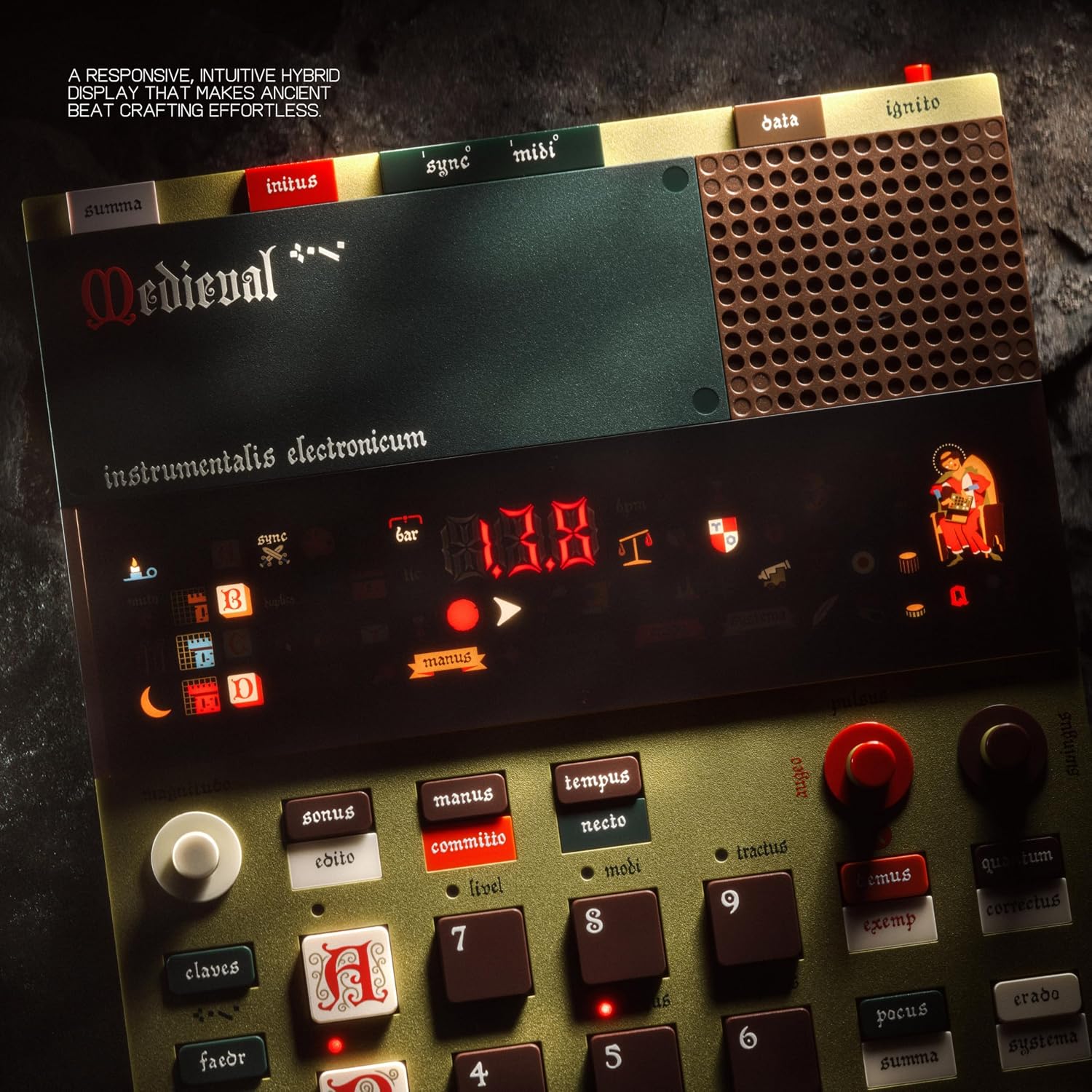
It would be negligent to discuss the EP-133 family without flagging the EP-1320 Medieval variant, which replaces the K.O. II’s interface labeling with a medieval-themed nomenclature layer. Community reception has been sharply divided. One camp calls it creatively stimulating once the conceptual mapping clicks; a second camp describes the medieval naming as an unnecessary UX burden that adds friction without adding function.
There is also a documented hardware limitation specific to the EP-1320: a same-key pitch constraint that prevents independent pitch assignment across certain sample slots when they share a key. Per Perfect Circuit’s editorial notes on the EP-133 family, this constraint surfaces as a practical problem during melodic percussion programming, and there is no confirmed firmware-level workaround as of mid-2026 — the limitation appears structural rather than addressable through a software update.
The decision rule here is direct: if you want EP-133 functionality, the standard K.O. II is the safer starting point. The Medieval is a personality variant, not a functional upgrade.
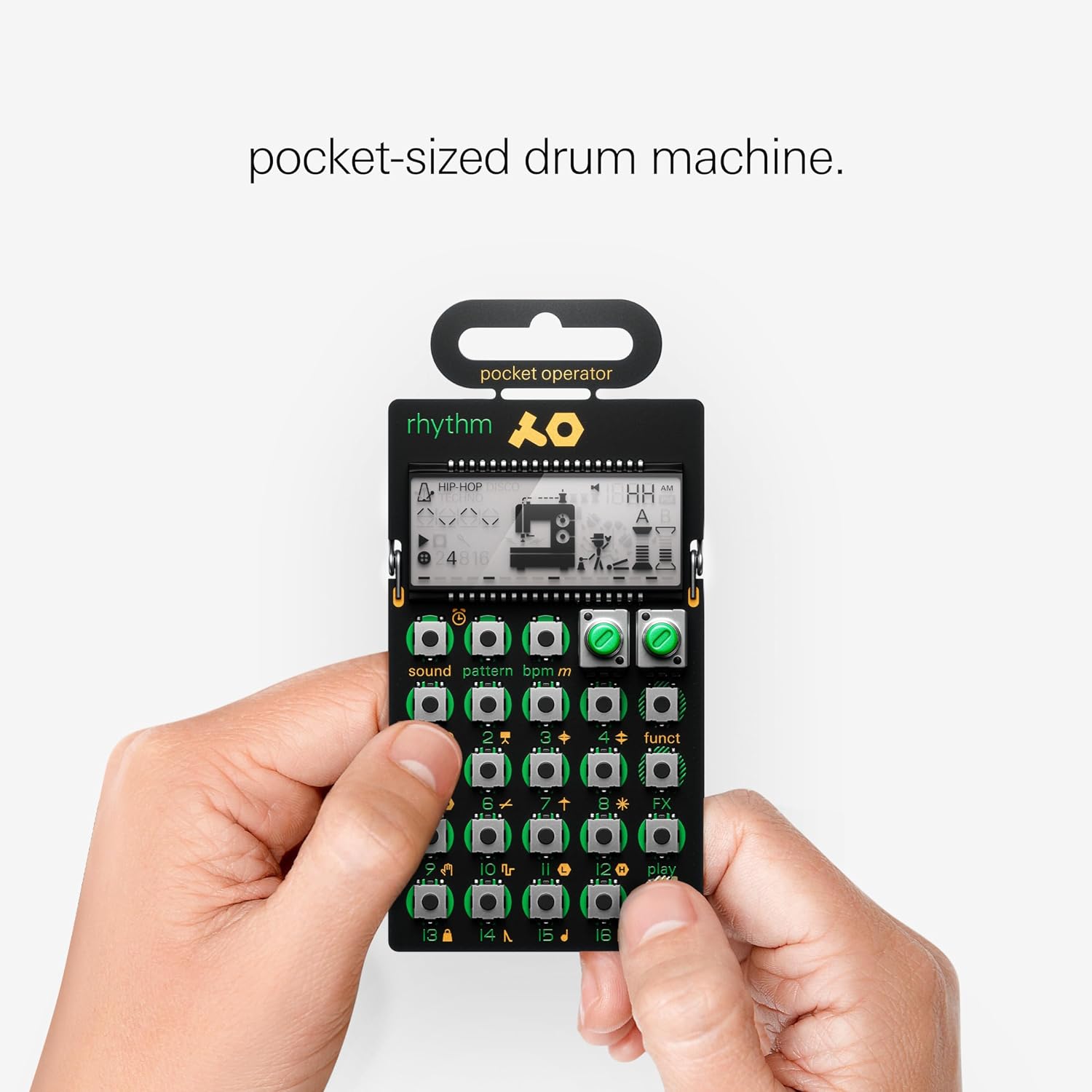
A Quick Word on the PO-24 Office
The PO-24 Office — a Pocket Operator built around noise, office textures, and found-sound palettes — surfaces reliably in discussions of overlooked instruments in the PO line. It is not a direct competitor to either device in this comparison, but it earns a mention here as evidence that the Pocket Operator range rewards exploration beyond the obvious drum-focused units. Producers who have worked through the PO-32 Tonic’s synthesis depth often find the PO-24’s unconventional palette opens different rhythmic territory when the two are synced together.
Frequently Asked Questions
Is the PO-32 Tonic really a synthesizer or just a sample player?
It is genuinely a synthesizer. The engine is a licensed hardware implementation of Sonic Charge’s Microtonic, a percussion synthesis platform with its own parameter architecture — oscillator type, noise blend, decay shape, distortion, and more. There are no pre-recorded samples involved in sound generation. MusicRadar’s review of the Teenage Engineering PO-32 Tonic is explicit on this point: the Tonic produces sounds that vary meaningfully with parameter changes in ways that a sample player cannot replicate.
What does Microtonic integration actually do for the PO-32?
Microtonic is a desktop plugin (VST/AU) that runs the same synthesis engine licensed to Teenage Engineering for the PO-32. The integration lets you design patches in the plugin’s more detailed interface, then transfer those patches to the hardware via an audio encoding method — the plugin plays a tone, the PO-32 listens and decodes it. This expands the Tonic’s programmable range enormously beyond what the hardware’s minimal interface alone would allow.
Can you chain the EP-133 with Pocket Operators?
Yes. The EP-133 K.O. II supports the standard PO sync protocol — a simple pulse signal that Teenage Engineering uses across its product line to synchronize clocks between devices. This means a K.O. II can clock a PO-32 Tonic, or vice versa, using a standard 3.5mm audio cable. It is not MIDI, but it is reliable for live use. CDM’s Teenage Engineering hardware coverage identifies this cross-device sync as one of the most-cited reasons producers build multi-device setups from the TE line.
What is the same-key pitch limitation on the EP-1320 and is there a workaround?
On the EP-1320 Medieval variant — not the standard K.O. II — certain sample slots that share a key assignment cannot be pitched independently. Per Perfect Circuit’s editorial notes on the EP-133 family, this surfaces as a constraint during melodic percussion programming: you cannot assign one sample on a shared key to one pitch and another sample on the same key to a different pitch. As of mid-2026, Teenage Engineering has not confirmed a firmware workaround.
Is the EP-133 K.O. II worth the price premium over the PO-32 Tonic?
It depends on what your workflow demands. If your process centers on designing a drum kit from scratch and programming rhythmic patterns, the Tonic delivers better cost efficiency — MusicRadar’s review describes it as a bargain at its price point. If your process centers on capturing sounds, layering textures, and building out a full track with distinct sections, the K.O. II’s song mode and sampling workflow justify the higher price, as both Sound On Sound’s review and Synthtopia’s hands-on overview conclude. Producers who use both in the same rig — synthesis for core drum voices, sampling for melodic and textural elements — consistently report they feel complementary rather than redundant, with CDM’s TE coverage specifically noting this combination as a common configuration among working producers.