If you’ve ever played live and wished you had a drummer, or looped a guitar riff and wanted a beat underneath it, you’ve landed in the right place. A drum machine pedal is a floor-effect unit—something you stomp on with your foot—that plays programmed drum patterns during a performance, hands-free. A looper is a pedal that records what you play in real time and plays it back on repeat, so you can layer parts live. When you combine the two, you can build an entire arrangement by yourself on stage. The question this article answers is a practical, money-on-the-line one: which combination of gear makes that actually work in 2026, and what are the real tradeoffs nobody explains until after you’ve bought something? We’re comparing the Singular Sound BeatBuddy, the MOOER D7 and GL200, and the BOSS RC-10R—the units that come up most often when performers are making this decision.
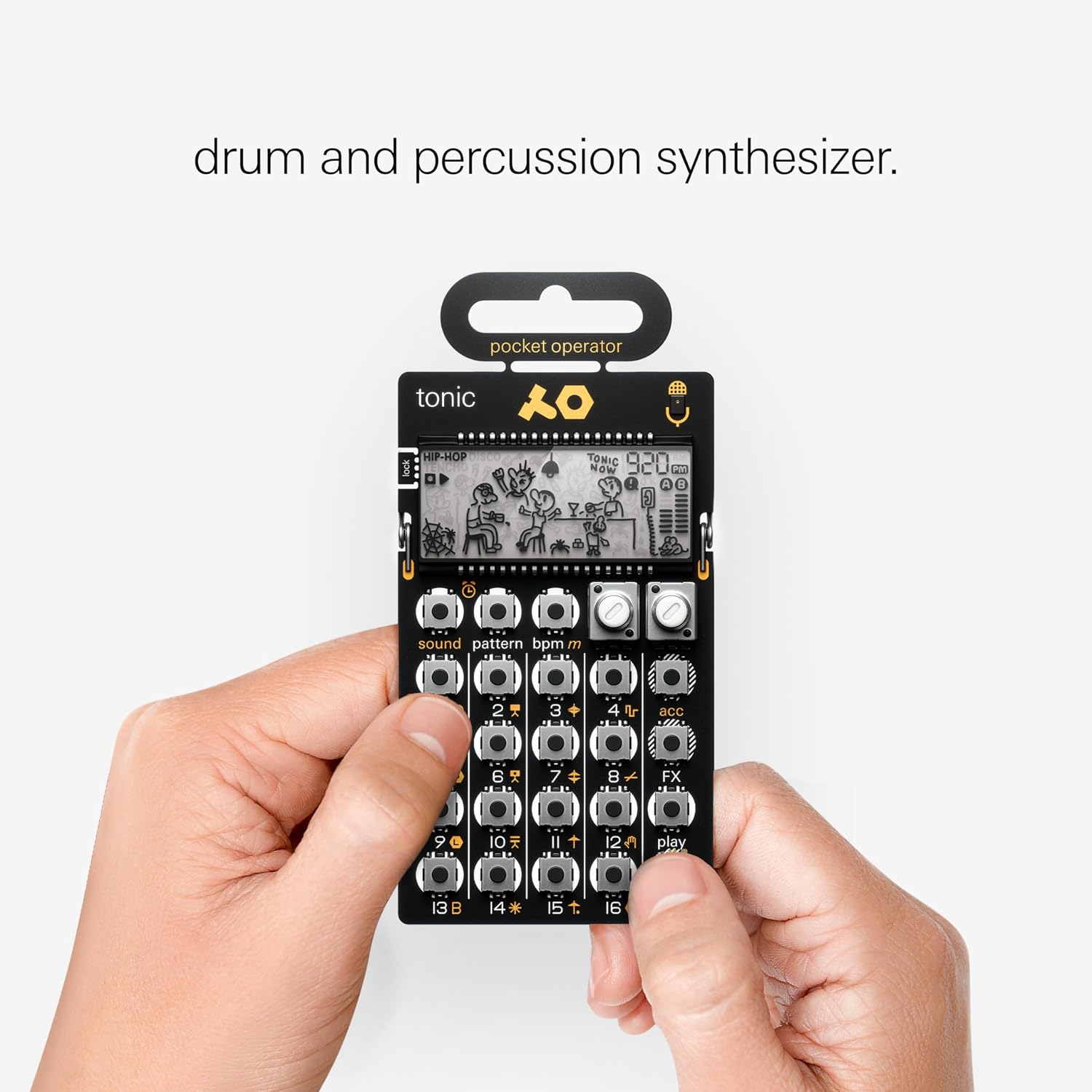
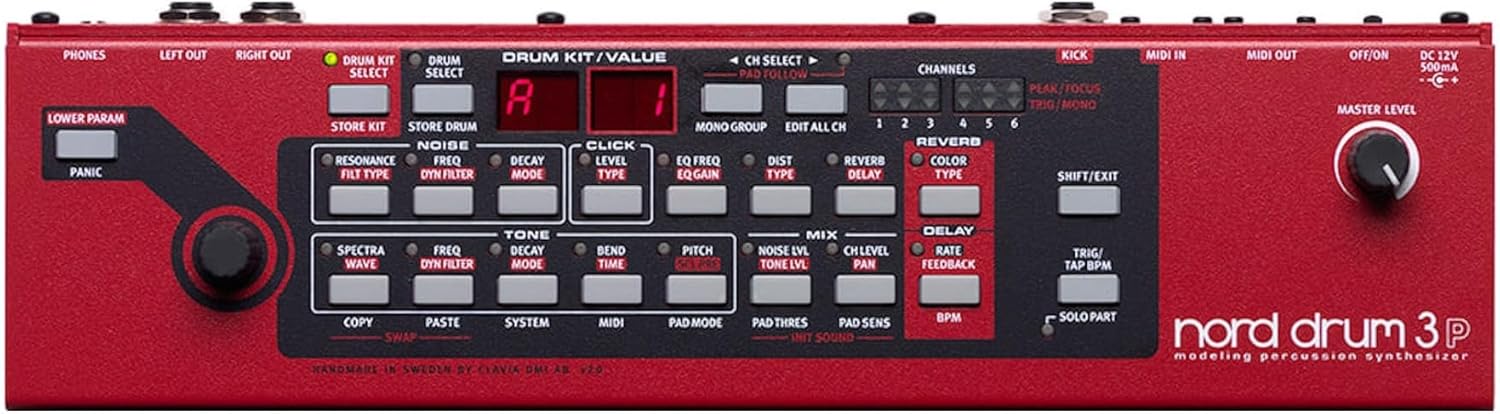
| EDITOR'S PICKNord Drum 3P Modeling 6-Channel… | Mid-tierSingular Sound BeatBuddy MINI 2… | Budget pickteenage engineering pocket oper… | |
|---|---|---|---|
| Type | Percussion synth | Drum machine pedal | Drum synth/sequencer |
| Channels | 6 | — | — |
| Modeling | ✓ | — | — |
| Hands-free | — | ✓ | — |
| Sequencer | — | — | ✓ |
| Data transfer | — | — | ✓ |
| Price | $1,099.00 | $149.00 | $99.00 |
| See on Amazon → | See on Amazon → | See on Amazon → |
What Each Unit Actually Is (And Isn’t)
Before comparing, it’s worth naming what these four products are trying to do, because they’re not all solving the same problem.
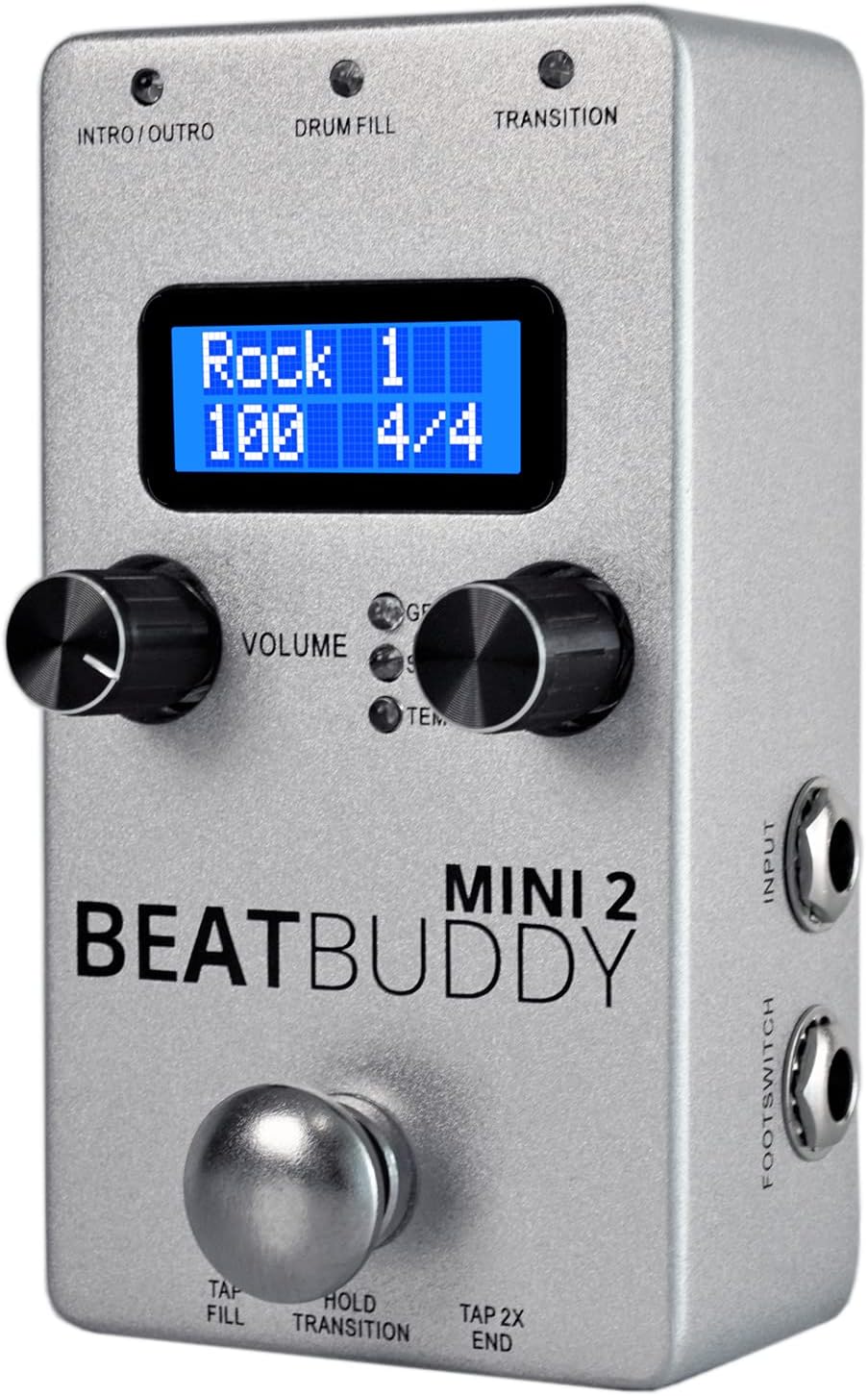
BeatBuddy (by Singular Sound) is a dedicated drum machine pedal—it runs patterns, responds to foot taps for tempo, and is designed primarily so a solo guitarist or singer-songwriter always has a live-sounding drummer behind them. It does not loop audio.
MOOER D7 is MOOER’s standalone drum machine pedal. The MOOER GL200 is a different product: a floor multi-effect unit that includes a drum machine and looper inside a single chassis. They share a brand but serve different use cases.
BOSS RC-10R is a looper pedal with a built-in rhythm section. It records and plays back loops and generates drum patterns, all from one unit. Sound On Sound, in their RC-10R review published in 2022, describes it as BOSS’s most ambitious looper to date and specifically highlights the rhythm section’s integration with the looping workflow as its defining characteristic.
Understanding these categories matters because your buying decision branches here: do you want dedicated boxes chained together, or an all-in-one unit?
Head-to-Head: Four Units, Four Use Cases
BeatBuddy — Best for Acoustic and Singer-Songwriter Performers
The BeatBuddy earns consistent praise across owner accounts documented in Sweetwater’s BeatBuddy product Q&A and in material published by Singular Sound for one specific quality: its drum patterns sound more like a real drummer than anything else in the floor-pedal category. The patterns breathe, velocities vary, and the result sits closer to a live performance than to a sequenced grid. MusicRadar, in their 2024 roundup titled “Best drum machine pedals for guitarists,” identifies the BeatBuddy as the go-to recommendation for acoustic performers and singer-songwriters who want organic-sounding rhythmic accompaniment.
There is, however, a documented workflow problem worth naming plainly before you buy: tempo resets every time you change song or genre. Multiple owner accounts in Sweetwater’s BeatBuddy Q&A section describe the re-entry process as cumbersome mid-performance. If you’re moving through a setlist with different tempos, this becomes friction at exactly the wrong moment.
The workaround is documented in Singular Sound’s official BeatBuddy Manager software guide: you organize songs in a specific setlist order and pre-save each song’s tempo before the show. Owners who invest time in this pre-show configuration report that the problem is largely eliminated—but it requires treating your setlist as a session document rather than something you can improvise freely on the fly.
For looper integration, the BeatBuddy has MIDI output and can send clock signal to a MIDI-capable looper or DAW. Owners who pair it with an external looper report good sync results when configured correctly, with the BeatBuddy acting as tempo master.
Singular
$149.00
In stock on Amazon
Check price on AmazonMOOER D7 — Best Native Odd-Meter Pattern Library at Its Price Point
The MOOER D7 is frequently noted for two features that distinguish it from simpler drum pedals: its fill function, which triggers a drum fill on demand, and its style variety, which includes patterns beyond standard 4/4 rock and pop. MOOER Audio’s official D7 product documentation confirms a pattern library that spans a range of feels and time signatures. Owners who play in odd meters—6/8, 7/8, or genre contexts where 4/4 is too rigid—report finding useful material in the D7’s native library without loading additional content.
The consistent criticism documented in Sweetwater’s D7 product Q&A section is that setup is genuinely confusing without adequate documentation. The manual that ships with the unit has been described by multiple owners as insufficient for understanding the routing and pattern-selection workflow. The practical workaround most owners arrive at is supplementing the official documentation with third-party video walkthroughs before the first gig.
MIDI sync between the D7 and other devices is technically possible but limited. MOOER Audio’s D7 documentation describes a constrained MIDI implementation, and owners who have attempted clock sync between the D7 and the BeatBuddy report inconsistent results as a consequence. For most live setups, performers choose one unit as their rhythm source rather than attempting to run both simultaneously.
teenage
$99.00
In stock on Amazon
Check price on AmazonMOOER GL200 — Best All-in-One Floor Unit for Producers Going Live
The MOOER GL200 sits in a different tier from the D7. It combines a drum machine, looper, and amp modeling into a single floor chassis—a serious value proposition for performers who want to minimize the number of boxes on their pedalboard. MOOER Audio’s official GL200 product documentation highlights onboard storage capacity and MIDI import capability as key features, which means you can design custom patterns in a DAW and load them onto the unit for live playback. At this price point, that capability is uncommon among competitors.
Owner reception is mixed on one important dimension: build quality. Sweetwater’s GL200 product Q&A section includes owner comments that raise concerns about physical construction, including at least one account of a unit arriving with something loose inside the chassis. This is worth noting for gigging musicians whose livelihood depends on gear not failing mid-show. For anyone purchasing the GL200 for live use, inspecting the unit carefully before the first gig and confirming your retailer’s return and exchange policy is a practical step, not an excess of caution.
The GL200’s MIDI import feature is the most direct answer in this comparison for performers who need odd time signatures. Rather than relying on a native library, you program the pattern you need in a DAW and load it onto the unit—a workflow that MOOER Audio’s official GL200 documentation describes in detail.
Singular
$149.00
In stock on Amazon
Check price on AmazonBOSS RC-10R — Best Integrated Drums-and-Loops Workflow
The RC-10R is the most complex unit in this comparison, and reviewers are consistent about what that complexity means in practice: there is a real learning curve, but the payoff for performers who invest the time is genuine. Sound On Sound, in their 2022 RC-10R review, specifically highlights the rhythm section integration as a distinguishing feature and describes the unit’s song-based workflow—where loops and drum patterns are organized together as a coherent arrangement—as setting it apart from simpler loopers where drums and loops operate as independent layers.
Owner accounts in the Sweetwater RC-10R product Q&A section use language like “once it clicked, I couldn’t go back” to describe the song-mode workflow. MusicRadar has also identified the RC-10R as a benchmark product for performers who want drums and loops to behave like a coherent arrangement rather than two separate tools running in parallel.
The RC-10R’s rhythm section can be used independently from the looper. Both owner accounts in Sweetwater’s Q&A section and BOSS’s own product documentation confirm that drum patterns run even when no loop is active, so the unit can function as a standalone drum accompaniment device when looping is not needed.
Nord
$1,099.00
In stock on Amazon
Check price on AmazonFeature Comparison at a Glance
| Feature | BeatBuddy | MOOER D7 | MOOER GL200 | BOSS RC-10R |
|---|---|---|---|---|
| Built-in Looper | No | No | Yes | Yes |
| MIDI Sync | Yes (out) | Limited | Yes | Yes |
| Odd Time Signatures | Via content packs | Yes (native) | Yes (MIDI import) | Yes (native) |
| All-in-One | No | No | Yes | Yes |
| Amp Modeling | No | No | Yes | No |
Integration: Making These Units Work Together
The cleanest integration story for combining a drum machine pedal with a looper is BeatBuddy as MIDI master with a separate looper as MIDI follower, or the RC-10R as an integrated single unit. Both approaches are well-documented: Singular Sound’s BeatBuddy Manager documentation covers the MIDI master configuration in detail, and Sound On Sound’s 2022 RC-10R review addresses the integrated workflow directly.
If you’re running a BeatBuddy alongside a third-party looper, check your looper’s MIDI specification before assuming clock sync will be seamless. Not all loopers respond to external MIDI clock the same way, and the quality of that sync varies by manufacturer implementation.
The MOOER D7 and BeatBuddy can coexist in the same signal chain as audio devices—both feeding into a PA or amp—but attempting MIDI clock sync between them produces inconsistent results, per owner accounts in Sweetwater’s respective product Q&A sections, because of the D7’s limited MIDI implementation. For most practical live setups, performers who own both choose one as their primary rhythm source.
The If/Then Decision Framework
If you’re a solo singer-songwriter or acoustic performer with structured setlists: The BeatBuddy delivers the most human-sounding results in this group. The tempo-reset issue is manageable with pre-show BeatBuddy Manager configuration, as documented by Singular Sound. MusicRadar’s 2024 guitarist-focused roundup names this use case as the BeatBuddy’s primary strength.
If you play in odd time signatures and need unusual rhythmic patterns without loading additional content: The MOOER D7’s native pattern library is the lowest-friction path. Budget time to supplement MOOER Audio’s official D7 documentation with third-party video resources before your first gig.
If you want a single floor unit covering drums, looping, and amp modeling: The GL200 is the only unit in this comparison that covers all three. Inspect your unit carefully on arrival, read the owner comments in Sweetwater’s GL200 Q&A section before purchasing, and confirm your retailer’s return policy before committing it to live use.
If you’re willing to invest time learning a deeper workflow and want drums and loops integrated at the arrangement level: The RC-10R’s song-mode workflow, as documented by both Sound On Sound and BOSS’s own materials, offers the highest ceiling in this group. The learning curve is real; so is the payoff.
If MIDI clock integration with external gear is a hard requirement: The BeatBuddy and RC-10R have the most robust MIDI implementations of the four units. The MOOER options trail significantly here, with the D7 being the most limited of the group.
Frequently Asked Questions
Can you lock tempo on the BeatBuddy so it doesn’t reset between songs? There is no single lock button for this. The documented workaround from Singular Sound’s official BeatBuddy Manager guide is to pre-configure each song’s tempo in the software before your show and navigate your setlist in the pre-defined order. Owners who use this approach describe the problem as largely resolved. Owners who improvise setlist order mid-show still encounter the issue.
Can the MOOER D7 and BeatBuddy be used together in the same signal chain? Yes, as audio devices feeding a shared output. MIDI clock sync between them is technically possible but owners report inconsistent results due to the D7’s limited MIDI implementation, as described in MOOER Audio’s D7 documentation. Most performers choose one as their rhythm source rather than running both simultaneously.
Does the RC-10R work as a standalone drum machine without looping? Yes. Owner accounts in Sweetwater’s RC-10R Q&A section and BOSS’s product documentation both confirm that the rhythm section functions independently from the looper. You can use it purely for drum accompaniment without recording any loops.
Is the MOOER GL200 built well enough for regular gigging? Owner reception is mixed. Many report no issues over extended use. Sweetwater’s GL200 Q&A section includes owner comments raising build-quality concerns, including at least one account of a unit arriving with something loose inside the chassis. Inspect your unit before the first show and verify your return policy. The feature set is impressive for the price; the quality-control track record is less consistent than BOSS’s.
What is the practical difference between song-mode and pattern-mode drum pedals? Pattern-mode pedals play individual loops or patterns on demand—you select a style and go. Song-mode pedals like the RC-10R, as described in Sound On Sound’s 2022 review, organize patterns, loops, and arrangements into a coherent song structure you move through sequentially. Pattern mode rewards improvisation and flexibility; song mode rewards preparation and arrangement-level thinking. For rehearsed sets, song mode is the stronger choice. For spontaneous sets, pattern mode reduces friction.
Do any of these pedals support odd time signatures out of the box? The MOOER D7 and BOSS RC-10R both include native odd-meter patterns, per their respective MOOER Audio and BOSS product documentation. The BeatBuddy supports odd time signatures via third-party content packs available through the Singular Sound ecosystem—a library limitation, not a hardware one. The GL200 supports MIDI import, meaning you can load custom odd-meter patterns programmed in a DAW, as detailed in MOOER Audio’s official GL200 documentation.