If you’ve ever tried to make beats purely in a computer—clicking a mouse, staring at a screen—you know the appeal of a hardware sampler. A hardware sampler is a standalone physical device that lets you record audio clips (called samples), arrange them into rhythms and melodies, and perform or export the result, all without a laptop in the room. Some are about the size of a hardcover book. Some have the footprint of a pizza box. All of them promise a more tactile, focused creative experience than software alone. The four machines in this comparison—the Elektron Digitakt II, the Akai MPC Sample, the Roland SP-404 MKII, and the Novation Circuit Rhythm—are among the most actively discussed samplers in producer communities right now, and they each serve a meaningfully different buyer. This article maps those differences clearly so you can make the call that matches your actual workflow, not just your gear-acquisition impulse.
| EDITOR'S PICKElektron Digitakt II 16-Track D… | Mid-tierNovation Circuit Rhythm: Sample… | Budget pickRoland SP-404MKII Creative Samp… | |
|---|---|---|---|
| Sample Tracks | 16 | 8 | — |
| Internal Storage | — | — | 16GB |
| Voice Polyphony | — | — | 32 |
| Sample Capacity | — | — | 160 |
| Form Factor | Drum Computer | Groovebox | Sampler |
| Price | $1,099.00 | $399.99 | |
| See on Amazon → | See on Amazon → | See on Amazon → |
Who Each Machine Is Actually Built For
Before the feature-by-feature breakdown, it helps to name the buyer profile each device is optimized for—because the “best” sampler is entirely relative to context.
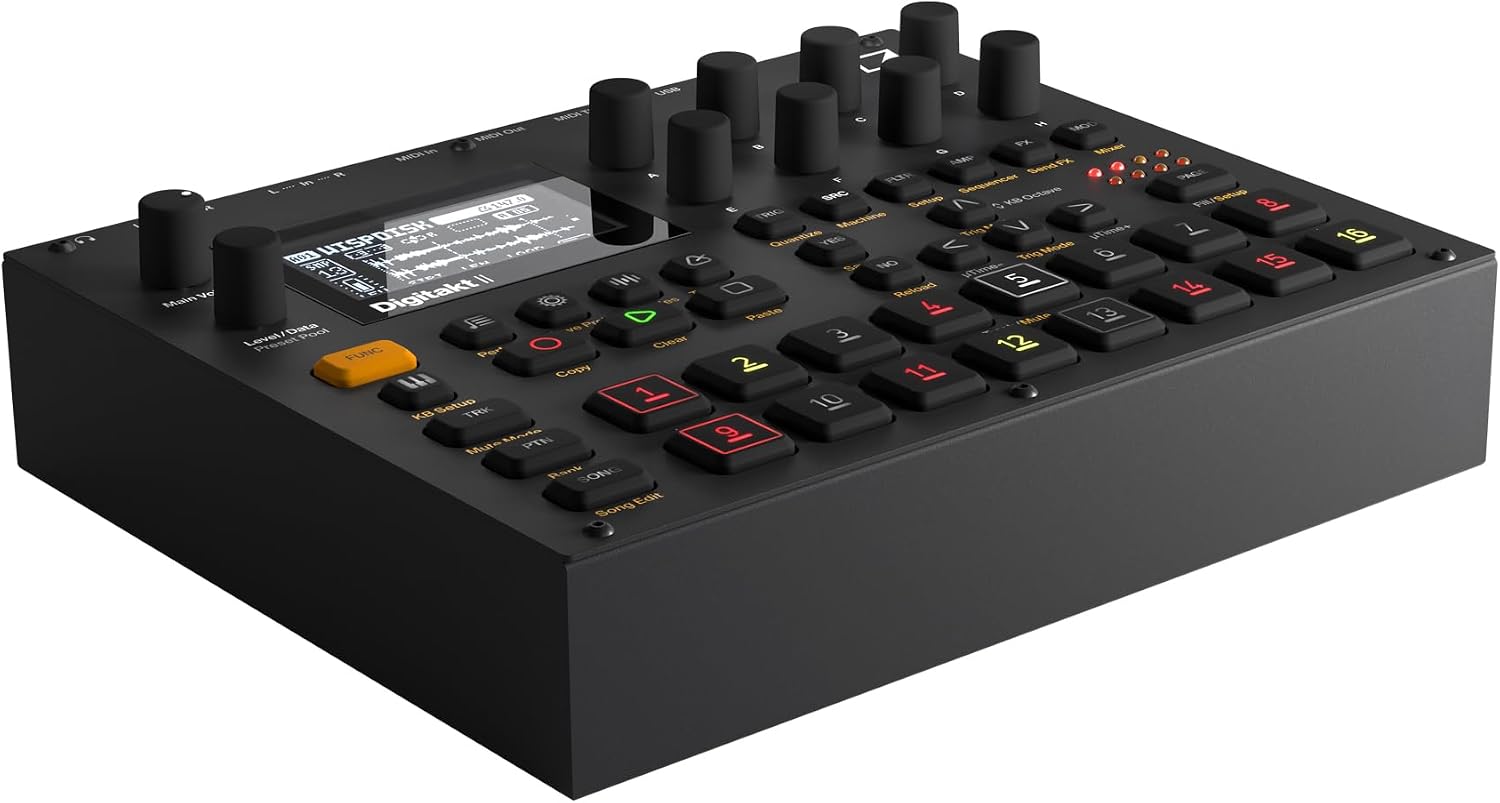
Elektron Digitakt II is the one producers reach for when they want to treat sampling as a deep compositional practice. Sound On Sound’s 2024 Elektron Digitakt II review highlights the device’s parameter-locking system—the ability to automate virtually any knob value step-by-step within a pattern—as a distinguishing feature that creates an expressiveness ceiling most competing devices don’t approach. Perfect Circuit’s editorial notes on the Digitakt II describe its step-sequencer architecture as a tool for musical ideas that pad-triggering workflows simply don’t surface as naturally. One consistent theme in extended-use coverage is that the device rewards months of study; owners keep finding functions that take significant time to surface. That’s a feature if you’re the kind of producer who treats gear study as part of the craft. It’s a real barrier if you want to be productive on day one.
Akai MPC Sample occupies a very different position. Attack Magazine’s hardware sampler workflow feature notes that the MPC platform’s touchscreen interface dramatically lowers the learning curve compared to parameter-dense hardware like the Digitakt, and positions the MPC lineup as the natural hardware destination for producers already familiar with Akai’s MPC software ecosystem. The MPC Sample is the portable, approachable entry point into that tradition—a device built around accessibility and a workflow that connects directly to decades of MPC community knowledge, tutorials, and sample packs.
Roland SP-404 MKII has the broadest documented user base of any device in this group. Roland’s own positioning for the SP-404 MKII deliberately targets DJs, MCs, guitarists, and podcasters alongside beat makers—which is unusual and meaningful. MusicRadar’s Roland SP-404 MKII review highlights the built-in effects engine as a primary draw, with a range of lo-fi, vinyl simulation, and real-time performance tools that competitors in this group don’t replicate. This is a device built for performance and audio mangling as much as composition, and its longevity in owner collections across genres reflects that design intent.
Novation Circuit Rhythm is the consistent surprise in this group. Sweetwater’s Circuit Rhythm product overview positions it as an entry-accessible device, but the community consensus—and its core feature set—confirms it scales further than that framing implies. Its ability to resample its own loops back into itself for further manipulation is a capability that changes the creative ceiling meaningfully for a device at its price point.
The Numbers That Actually Matter
| Device | Tracks | Polyphony | Storage | Standalone? |
|---|---|---|---|---|
| Elektron Digitakt II | 16 (8 audio + 8 MIDI) | 8-voice | +Drive (1 GB internal + project slots) | Yes |
| Akai MPC Sample | 8 pads / tracks | 4-voice | Internal + SD card | Yes |
| Roland SP-404 MKII | 16 pads | Polyphonic | SD card (up to 32 GB) | Yes |
| Novation Circuit Rhythm | 8 sample tracks | 8-voice | SD card | Yes |
All four operate fully standalone—no computer or WiFi connection required for core functions, though software editors and firmware updates typically require a computer connection at some point.
Head-to-Head: Depth vs. Accessibility
Elektron Digitakt II — The Deep-End Option
The Digitakt II is the ceiling-raiser in this group, and that comes with a real cost: time. Sound On Sound’s 2024 Digitakt II review and Perfect Circuit’s editorial coverage both describe its operational model as fundamentally different from pad-based MPC-style workflows. The device works through a grid of hardware buttons, encoders, and a small screen—no touchscreen, no visual skeuomorphism borrowed from software. The step-sequencer is the primary compositional instrument, and parameter locking (automating individual knob values per step) is the feature that separates it from everything else in this comparison.
For producers working in techno, IDM (Intelligent Dance Music—a term for cerebral, rhythmically complex electronic music), experimental electronic, or sound-design-forward hip-hop, Attack Magazine’s hardware workflow coverage places the Digitakt platform squarely in that creative lineage. The tradeoff is a learning curve measured in weeks, not days.
Elektron
$1,099.00
In stock on Amazon
Check price on AmazonRoland SP-404 MKII — The Performer’s Tool
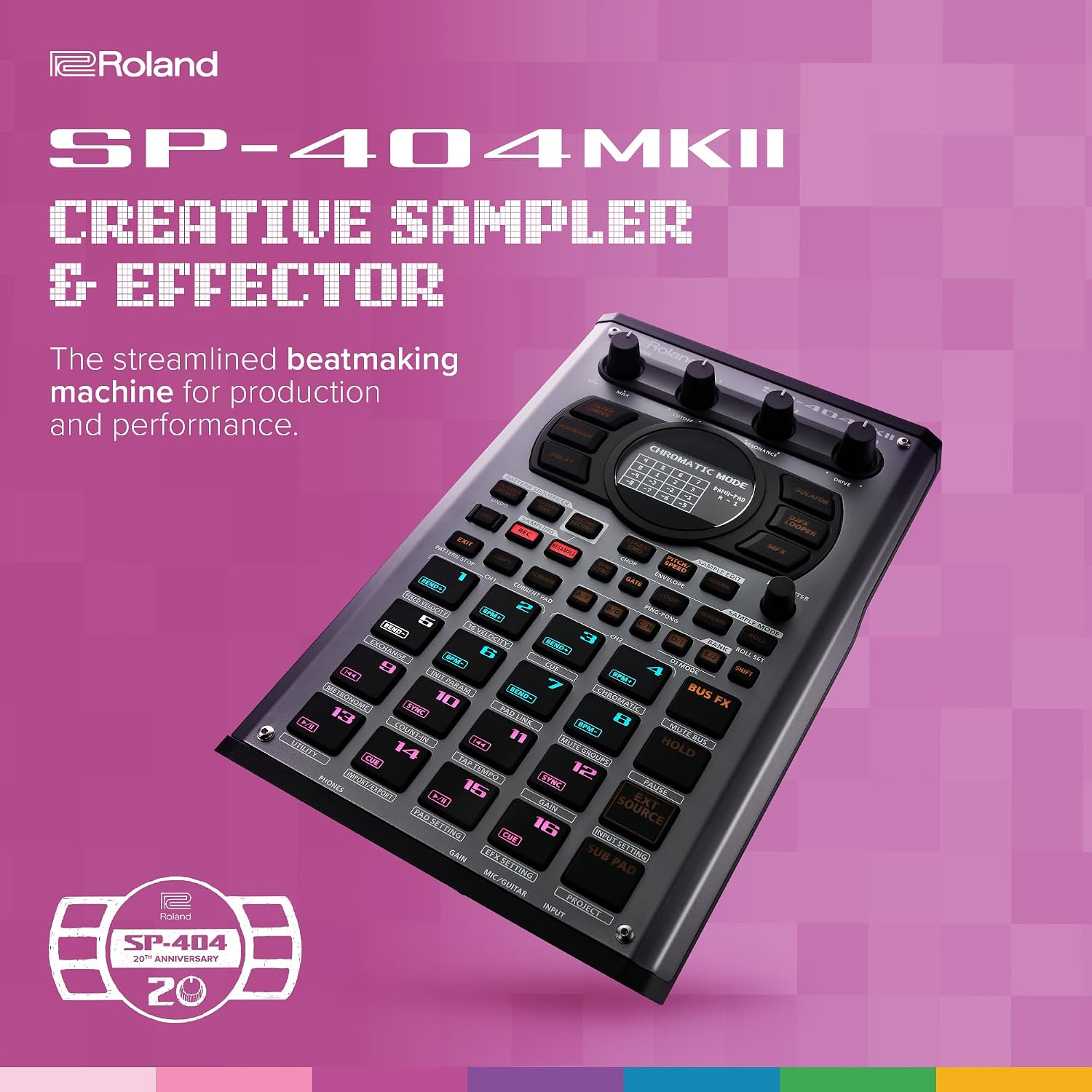
The SP-404 MKII lives in a different quadrant from the Digitakt II entirely. Where the Digitakt is about compositional depth, the SP-404 MKII is about what happens to audio in real time. MusicRadar’s Roland SP-404 MKII review identifies the effects engine as the device’s primary creative instrument—lo-fi processing, vinyl saturation, reverb, and a suite of real-time performance tools that no other device in this group matches. Roland’s cross-disciplinary positioning (beat makers, DJs, MCs, guitarists, podcasters) reflects that the SP-404 MKII is genuinely genre-neutral by design.
As a platform for elaborate sequenced arrangements, it is the weakest of the four devices in this comparison. As a performance and sound-mangling tool, it is irreplaceable. Owners who have used it for years across contexts consistently report finding new creative routes—a longevity signal worth weighting. Battery operation is documented, making it genuinely mobile in a way the Digitakt II (which requires mains power) is not.
Novation
$399.99
In stock on Amazon
Check price on AmazonNovation Circuit Rhythm — The Smart Entry Point
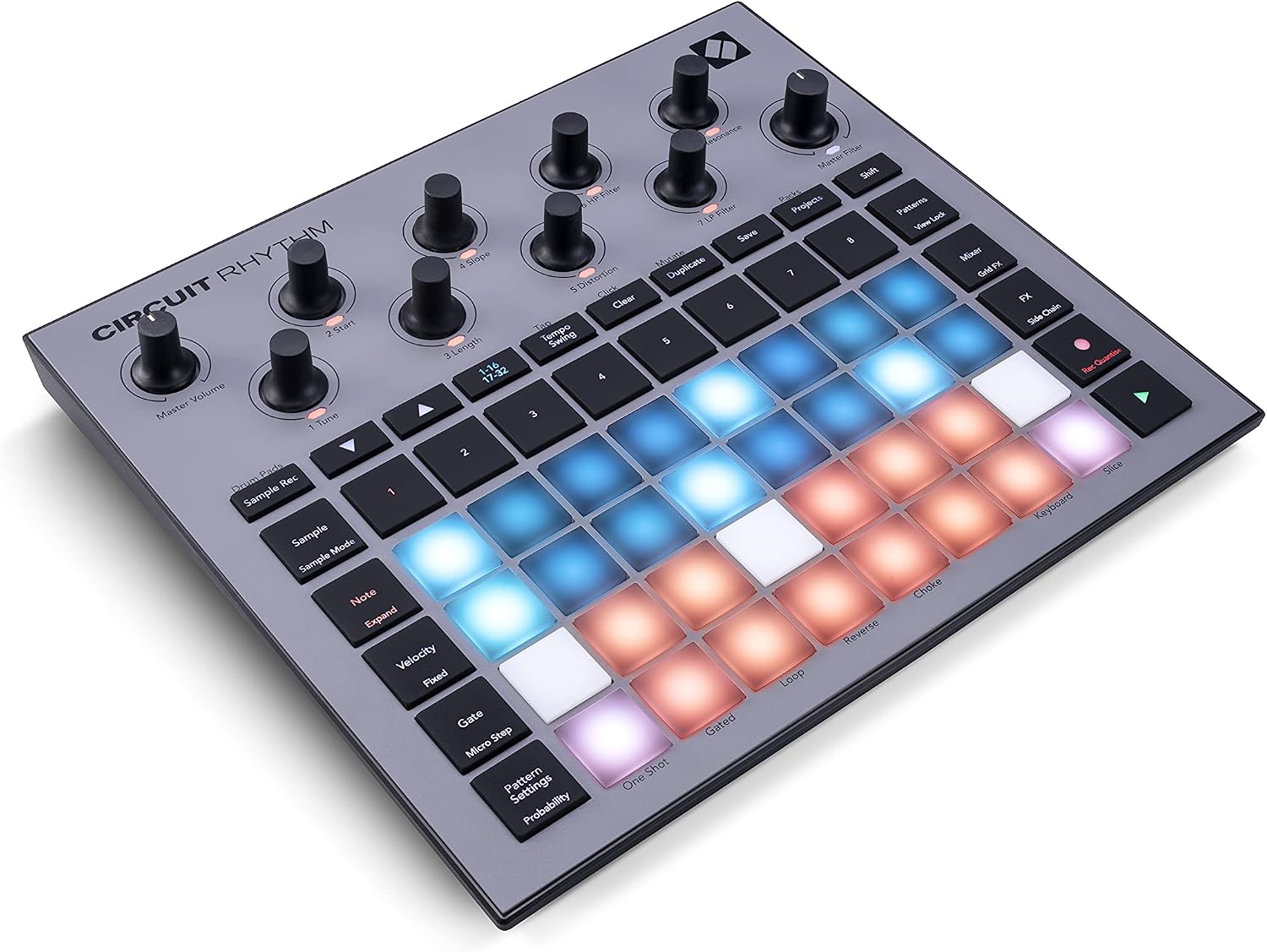
The Circuit Rhythm is grid-based and sequencer-centric in its operational philosophy, placing it closest to the Digitakt II in approach—but with a shallower depth curve and a substantially lower price. Sweetwater’s Circuit Rhythm product overview notes its accessibility for producers new to hardware sampling, and that framing is accurate as far as it goes. What the spec sheet undersells is the resampling capability: the Circuit Rhythm can record its own output back into the sample pool for further manipulation, a workflow that pushes its creative ceiling well past what entry-level positioning implies.
For producers who want to develop a step-sequencer workflow or test their appetite for grid-based sampling before committing to Elektron’s ecosystem or a full MPC setup, the Circuit Rhythm is the natural proving ground. You won’t outgrow it as quickly as its price might suggest.
Roland
In stock on Amazon
Check price on AmazonWhere the Real Tradeoffs Live
The Ecosystem Question
Akai’s MPC platform carries decades of sample packs, tutorials, community knowledge, and software integration. Attack Magazine’s hardware sampler workflow feature explicitly notes that the MPC platform’s touchscreen mirrors the software experience many producers already know—making it the path of least resistance for anyone already invested in that ecosystem. The MPC Sample is the portable, lower-commitment entry; community comparisons and Perfect Circuit’s editorial framing both position the MPC One+ as the closer functional counterpart to the Digitakt II for complex standalone work.
Elektron has its own ecosystem—Overbridge software for DAW integration, Transfer for file management—which is well-regarded among Elektron users but represents a separate learning investment with no crossover from MPC workflows.
Roland’s SP-404 MKII has a dedicated and active community with an enormous library of community-created effect chains, tutorials, and performance patches. MusicRadar’s review notes that this community infrastructure meaningfully extends the device’s useful life. Novation’s Circuit Rhythm community is smaller but loyal, and the device benefits from Novation’s broader support infrastructure.
Portability and Power
The Akai MPC Sample and Roland SP-404 MKII both support battery operation, making them genuinely mobile devices suitable for production away from a dedicated studio—on the road, at a kitchen table, in transit. The Elektron Digitakt II requires mains power, which is a material constraint if portability is part of your use case. The Circuit Rhythm’s power requirements should be confirmed against current Novation documentation, as power options have varied across firmware and hardware revisions.
Genre Fit at a Glance
The SP-404 MKII’s documented user base is the most genre-agnostic. MusicRadar’s review specifically calls out its appeal across hip-hop, ambient, electronic, DJ performance, and podcast production—breadth that is a genuine selling point if your work crosses genres or contexts.
The Digitakt II skews toward electronic music traditions where step-sequencer expressiveness matters: techno, experimental electronic, IDM, and sound-design-forward production. Attack Magazine’s hardware workflow coverage places the Digitakt platform in this lineage explicitly.
The MPC Sample leans toward boom-bap and sample-based hip-hop as a primary orientation, with the strongest historical claim to that tradition of any device in this group. The Circuit Rhythm offers a fresher, grid-based take on loop construction with similar stylistic leanings but a more open-ended resampling workflow.
The Decision Frame
If you want maximum compositional depth and you’re willing to invest months learning a new operational logic—then the Digitakt II is the ceiling-raiser. Budget the time alongside the money. Sound On Sound’s 2024 coverage and Perfect Circuit’s editorial notes both confirm its depth is real, not marketing copy.
If you’re coming from MPC software and want a hardware transition with minimal friction—then the MPC ecosystem is the path of least resistance. The MPC Sample is the portable, accessible entry point; the MPC One+ is the closer counterpart to the Digitakt II for complex work.
If real-time performance and audio mangling matter as much as composition—then the SP-404 MKII has no real competition in this group. MusicRadar’s review and its cross-genre owner base both confirm it as the lowest-regret buy for performers.
If you want to develop a step-sequencer workflow without committing to Elektron’s price or complexity—then the Circuit Rhythm is the right first step, and the resampling capability means you won’t outgrow it as fast as the price implies.
None of these are wrong answers. They are different answers to different questions about how you actually work.
Frequently Asked Questions
Is the Elektron Digitakt II suitable for a producer coming from Akai MPC software? It can be, but the transition requires genuine adjustment. Sound On Sound’s 2024 Digitakt II review and Perfect Circuit’s editorial framing both describe it as a different operational paradigm, not a hardware replica of MPC. The step-sequencer logic rewards the investment, but expect a learning curve measured in weeks, not days.
Does the Akai MPC Sample work without a computer or WiFi connection? Yes. The MPC Sample operates as a fully standalone device for core sampling, sequencing, and playback functions. Software editors and firmware updates require a computer connection, but day-to-day production does not. Attack Magazine’s hardware workflow feature confirms this as a defining advantage of the MPC platform’s hardware lineup.
Can the Novation Circuit Rhythm resample and chop its own loops? Yes, and this is one of the most frequently cited surprise capabilities in owner coverage. The Circuit Rhythm can record its own output back into the sample pool for further manipulation—a workflow that significantly expands its creative range beyond what Sweetwater’s product overview communicates at first glance.
Is the Roland SP-404 MKII useful for genres beyond hip-hop beat making? Strongly yes. MusicRadar’s Roland SP-404 MKII review documents its use across ambient, electronic, DJ performance, and podcast production contexts. Roland’s own cross-disciplinary positioning confirms this: the effects engine is genre-neutral by design, and the device’s longevity in diverse owner collections reflects that.
How does the Digitakt II compare to the MPC One+ for standalone use? Community coverage and editorial notes from both Perfect Circuit and Attack Magazine describe them as functional counterparts operating on different design philosophies. The MPC One+ runs full MPC software with a touchscreen, making it the natural hardware destination for established MPC software users. The Digitakt II uses a hardware-button-and-encoder interface built around its step-sequencer and parameter-locking system. Both are legitimate standalone platforms; the choice depends on which operational model fits your existing intuition and creative goals.